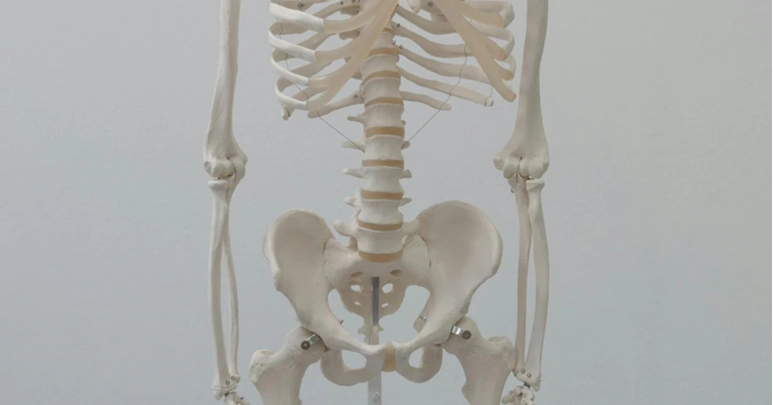
Archaeologists in Bulgaria have uncovered the 6,000-year-old skeleton of a young man who survived a violent attack by a large carnivore, believed to have been a lion, offering rare evidence of prehistoric encounters between humans and big predators.
The discovery was made at a Late Eneolithic burial site in the Thracian region of eastern Bulgaria and has been detailed in the February 2026 issue of the Journal of Archaeological Science: Reports, according to international media.
Researchers said the man, who lived between 4600 and 4200 BC, was aged between 18 and 30 at the time of his death and stood more than 5 feet 7 inches tall. His remains were found near Kozareva Mogila, also known as Goat Mound, close to the Black Sea coast.
Examinations of the skeleton revealed severe injuries to the skull and limbs, including puncture wounds consistent with an attack by a large carnivore. The wounds had healed, indicating that the man survived the attack, which is believed to have occurred during his adolescence.
Paleontologist Nadezhda Karastoyanova of the Bulgarian Academy of Sciences said lions were present in eastern Bulgaria during the Late Eneolithic period. She led the zooarchaeological analysis alongside researchers Veselin Danov, Petya Petrova and Victoria Ruseva.
Karastoyanova said more than 15 sets of lion remains have been found at prehistoric sites across Bulgaria, some bearing cut marks that suggest hunting and butchering by humans.
Researchers noted that direct skeletal evidence of animal attacks from prehistoric times is extremely rare, making the find particularly significant.
With inputs from NDTV