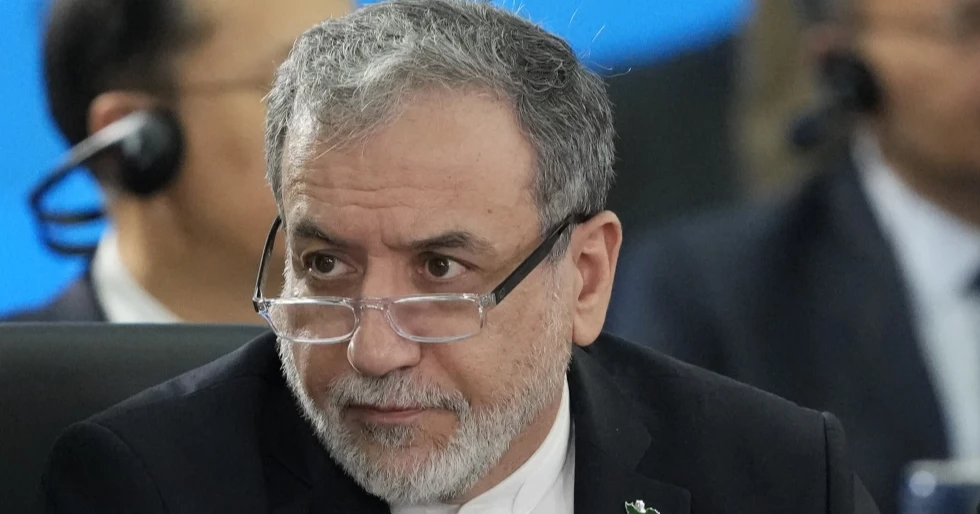
Iran signaled its willingness to restart nuclear negotiations with the United States, but only if firm guarantees are given that no further attacks will be carried out against its territory, according to Iranian state media.
Foreign Minister Abbas Araghchi told foreign diplomats in Tehran on Saturday that while Iran has always remained open to talks on its nuclear program, a return to the negotiating table must come with assurances that such engagement will not escalate into military conflict.
“There must be a clear guarantee that, if talks resume, they won’t lead to war,” said Araghchi. He pointed to recent attacks on Iranian military and nuclear sites, including a 12-day Israeli bombing campaign and a U.S. airstrike on June 22, as major obstacles to dialogue.
“If the U.S. and other parties are serious about returning to negotiations, the first step must be a commitment that these kinds of attacks will not be repeated,” Araghchi stressed, adding that the assault on Iran’s nuclear facilities has significantly complicated diplomatic efforts.
Iran’s missile strike in Qatar damaged US communications dome, satellite images show
Following the strikes, Iran suspended its cooperation with the International Atomic Energy Agency (IAEA), resulting in the withdrawal of inspectors. Araghchi noted that any future collaboration with the U.N. nuclear watchdog would be evaluated "case by case," based on Iran’s national interests. He emphasized that inspections must also consider Iran's security and the safety of inspectors, citing the risk of radioactive exposure and unexploded munitions at damaged sites.
The foreign minister reaffirmed Iran’s stance on continuing its domestic uranium enrichment program — a sticking point for Washington, which under President Donald Trump had insisted on a complete halt.
Israel has defended its actions by claiming Iran was close to developing a nuclear weapon. However, U.S. intelligence agencies and the IAEA maintain that Iran hasn’t had an organized weapons program since 2003, although it has enriched uranium up to 60% — close to weapons-grade levels of 90%.
Iranian President Masoud Pezeshkian said in an interview published earlier this week that U.S. strikes had caused extensive damage to Iran’s nuclear infrastructure, to the extent that authorities are still unable to assess the full extent of destruction.
Source: Agency