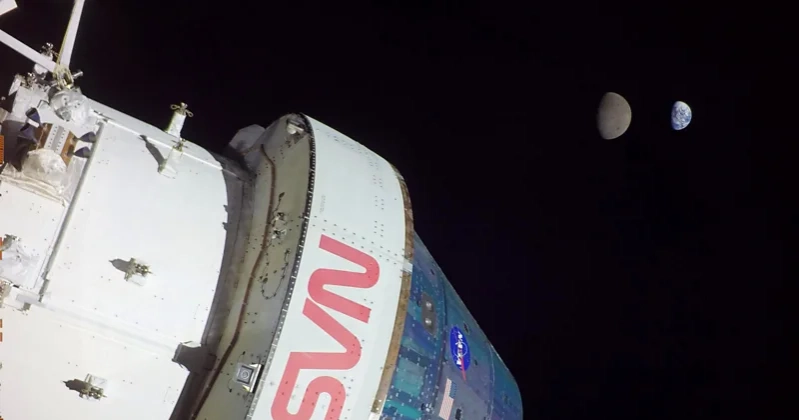
As Nasa prepares for its Artemis programme to return humans to the Moon, space agencies say future astronauts will face extreme physical, psychological and social challenges far beyond those experienced during earlier space missions.
Nasa astronaut Victor Glover, who will pilot the Artemis II mission, says space travel is far more demanding than many people realise. The mission will take the Orion spacecraft farther than any crewed mission in history, with four astronauts confined to a small capsule for about 10 days without any possibility of resupply.
Glover said even basic resources such as food and water must be carefully managed, while privacy will be almost non existent. Routine activities, including using the hygiene compartment, can disrupt the entire crew due to noise in the tight living space. He said such conditions require extensive psychological preparation, not just technical skill.
Artemis II marks the first stage of humanity’s long term return to the Moon. Future missions plan to land astronauts near the Moon’s South Pole and establish a base where crews may live for months. Astronauts will operate days away from Earth in an airless, dusty environment with extreme temperatures, high radiation levels and lunar nights lasting up to two weeks.
Experts say selecting the right astronauts is crucial. According to Sergi Vaquer Araujo of the European Space Agency, the ideal candidate is not exceptional in just one area but competent across many domains, including physical health, mental resilience and teamwork.
While early astronauts were chosen mainly for peak physical fitness and competitive instincts, modern missions place greater emphasis on cooperation and emotional intelligence. ESA’s recent astronaut selection process focused heavily on group tasks, rewarding candidates who prioritised team success over individual achievement.
Certain medical conditions still disqualify candidates, including chronic lung disease, heart irregularities or colour blindness. Space agencies say this is necessary because advanced medical treatment is not available during deep space missions.
To better understand how people cope with long term isolation, scientists study environments on Earth that resemble space conditions. British surgeon Nina Purvis recently spent a winter at the Concordia research station in Antarctica, living with 12 others in complete isolation for several months. She said adaptability, calmness under pressure and being pleasant to work with are essential traits.
Researchers at Concordia also examined boredom and mental wellbeing, finding that structured group activities such as yoga, art and mindfulness exercises improved morale and social cohesion. Scientists believe similar practices will become part of daily routines for future Moon crews.
Private initiatives are also contributing to lunar living research. During the Covid pandemic, two European architects lived for 60 days in a prototype Moon habitat in northern Greenland. The compact structure was designed to simulate confinement while providing personal space and artificial lighting to maintain healthy sleep cycles.
The experiment later led to a company specialising in designing space habitats for agencies and private firms. One of the designers said living in extreme conditions helped identify small daily frustrations that could be solved through better design.
Despite years of preparation, Glover admits that the psychological impact of travelling so far from Earth remains uncertain. He said the true test of readiness will only come after the mission is complete.
As space agencies move closer to sustained human presence on the Moon, experts agree that success will depend as much on mental strength, cooperation and adaptability as on rockets and technology.
With inputs from BBC