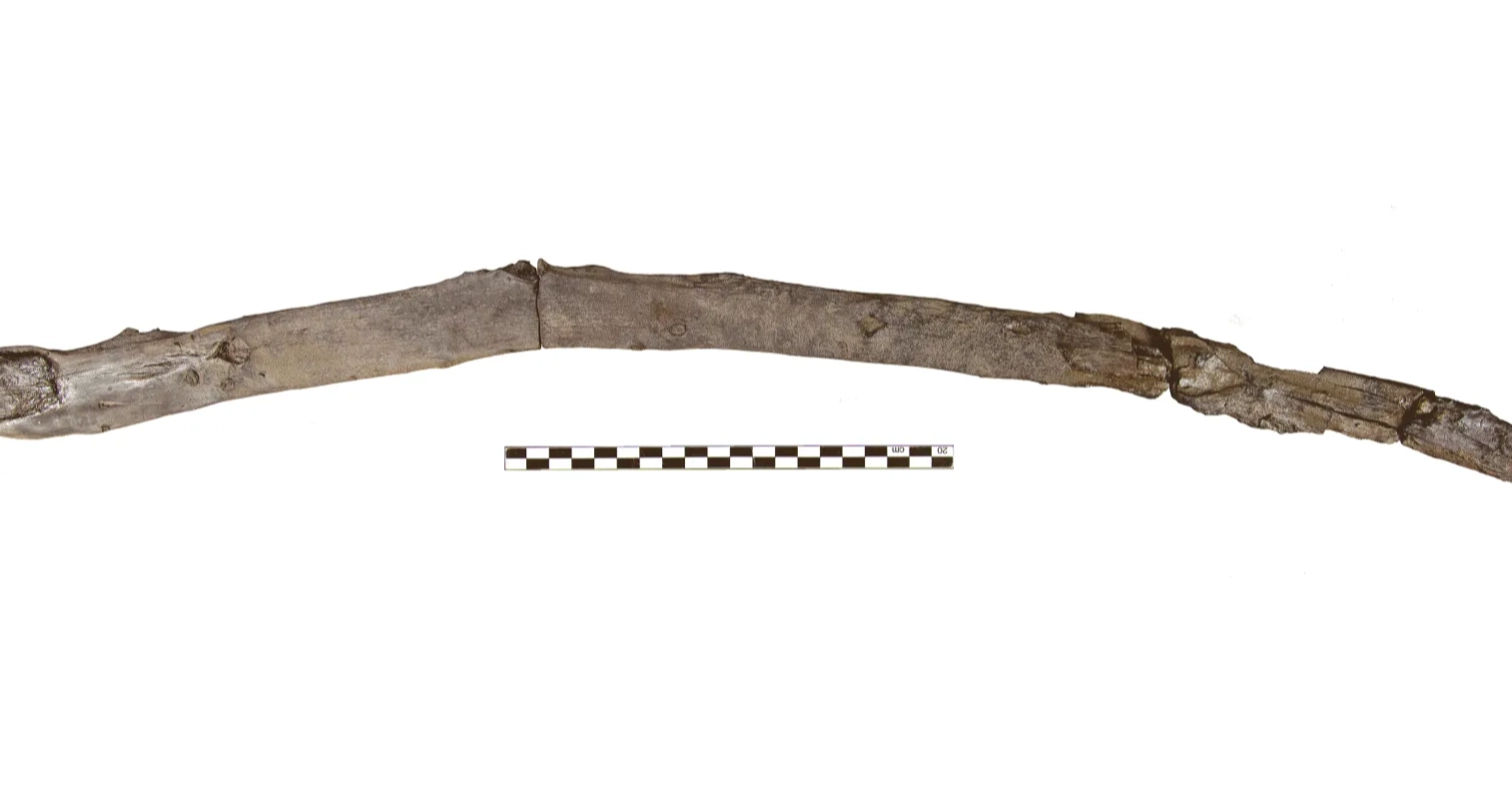
Researchers say two artifacts discovered along a lakeshore in Greece are the oldest known wooden tools yet uncovered, dating back about 430,000 years.
One artifact is a slender stick measuring roughly 2½ feet (80 centimeters) in length that may have been used to dig into muddy ground. The second is a smaller, more enigmatic handheld piece made from willow or poplar wood that researchers believe could have been used in shaping stone tools. The findings were published Monday in the journal Proceedings of the National Academy of Sciences.
Scientists believe early humans relied on a wide range of tools crafted from stone, bone and wood. However, evidence of wooden tools is rare because the material decomposes rapidly over time. Preservation typically occurs only in specific conditions, such as icy environments, caves or underwater settings.
The newly discovered wooden tools were found in Greece’s Megalopolis basin, where researchers believe they were rapidly buried by sediment and preserved over time by wet conditions. Scientists have previously uncovered other remains at the site, including stone tools and elephant bones bearing cut marks. Although the wooden tools were not directly dated, the site itself is estimated to be about 430,000 years old, offering clues to their age.
Read More: Science and local sleuthing uncover 250-year-old Shipwreck on Scottish Island
“I’ve always just been thrilled to be able to touch these objects,” said study author Annemieke Milks of the University of Reading.
No human remains have yet been identified at the location, leaving uncertainty over who used the tools. Possible users include Neanderthals, early human ancestors or other hominins.
Archaeologist Jarod Hutson of the Smithsonian National Museum of Natural History said the site may contain additional discoveries, though the plain appearance of the tools makes interpretation difficult.
The find adds to rare examples of ancient wooden tools and sheds light on a lesser-known aspect of early human technology.