Experts are studying Ukraine’s farmland damaged by the ongoing war with Russia to see if it can be safely used for farming again.
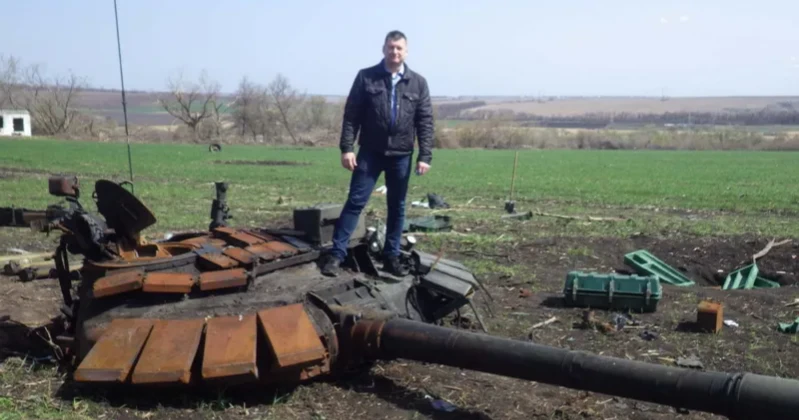
Fighting has turned wheatfields into battle zones, with bombs, shells, and burned-out tanks leaving toxic metals like lead, zinc, cadmium, cobalt, copper, and nickel in the soil. These elements can harm human health and contaminate crops.
Researchers from the Royal Agricultural University in the UK and Sumy National Agrarian University in Ukraine have tested over 8,000 soil samples. They found that soil near burned military vehicles and crashed drones has the highest contamination, while bomb craters are less polluted.
Dr Olena Melnyk, a leading Ukrainian soil scientist, said farmers do not need to stop farming entirely. Only the “hotspot” areas need special care. Scientists are teaching farmers how to block off these areas and clean up the soil so crops can grow safely.
Ukraine, known as “Europe’s breadbasket,” was a major exporter of sunflower seeds and grains before the war. Cleaning the soil is crucial to feed Ukrainians and maintain its role in global food supply.
Dr Melnyk said, “Our land can continue to grow food for our people and feed the rest of the world too.”
With inputs from BBC