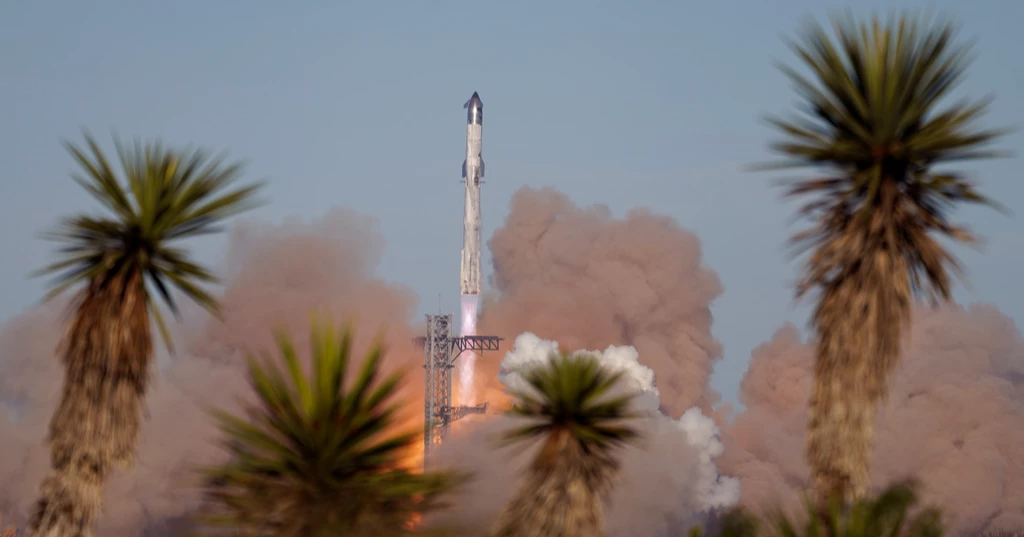
SpaceX suffered the loss of its spacecraft during its latest Starship test flight on Thursday after an exciting booster catch at the launch pad ended in disappointment, reports AP.
The spacecraft, a newly upgraded model making its debut, was destroyed in what SpaceX described as a “rapid unscheduled disassembly.” During ascent, its six engines appeared to shut down one by one, with contact lost 8 1/2 minutes into the flight.
Bezos' New Glenn rocket successfully orbits on debut flight
This test flight aimed to replicate previous missions, sending the spacecraft on a near-global trajectory across the Gulf of Mexico from Texas. It carried 10 dummy satellites to practice deployment procedures.
Moments before the spacecraft's loss, SpaceX successfully caught the returning booster using the launch tower's mechanical arms, known as chopsticks. The booster hovered over the pad before being secured by the arms, marking only the second time this manoeuvre had been accomplished.
Despite the achievement, the subsequent destruction of the spacecraft left both SpaceX and spectators gathered in southern Texas disheartened. "It was great to see the booster land, but we’re obviously disappointed about the spacecraft," said SpaceX spokesman Dan Huot, emphasising that this was a flight test involving an experimental vehicle.
Elon Musk wants to turn SpaceX's Starbase site into Texas
The spacecraft had reached an altitude of 90 miles (146 kilometres) and a velocity of 13,245 mph (21,317 kph) before its destruction. Elon Musk later stated on X (formerly Twitter) that a preliminary analysis suggested fuel leakage might have built up pressure in a cavity above the engine firewall. Plans are underway to enhance fire suppression, venting, and leak detection.
The 400-foot (123-metre) rocket had launched late in the afternoon from Boca Chica Beach near the Mexican border. The timing aimed to facilitate a daylight entry over the Indian Ocean. However, the spacecraft fell far short of completing its intended trajectory.
SpaceX had incorporated several upgrades into the spacecraft for this test and included satellite mockups matching the size of its Starlink internet satellites. Both the spacecraft and the dummy satellites were intended for destruction upon atmospheric re-entry.
Musk envisions Starship launching actual Starlink satellites in the near future, followed by other payloads and crewed missions. NASA has already contracted two Starship flights to land astronauts on the moon later this decade, while Musk’s ultimate goal remains Mars.
SpaceX launches rescue mission for 2 NASA astronauts who are stuck in space until next year
In a separate development, Jeff Bezos’ Blue Origin launched its newest rocket, New Glenn, from Florida earlier the same day. The rocket successfully reached orbit on its maiden flight, deploying an experimental satellite thousands of miles above Earth. However, its first-stage booster was lost after missing the target landing on a floating platform in the Atlantic.