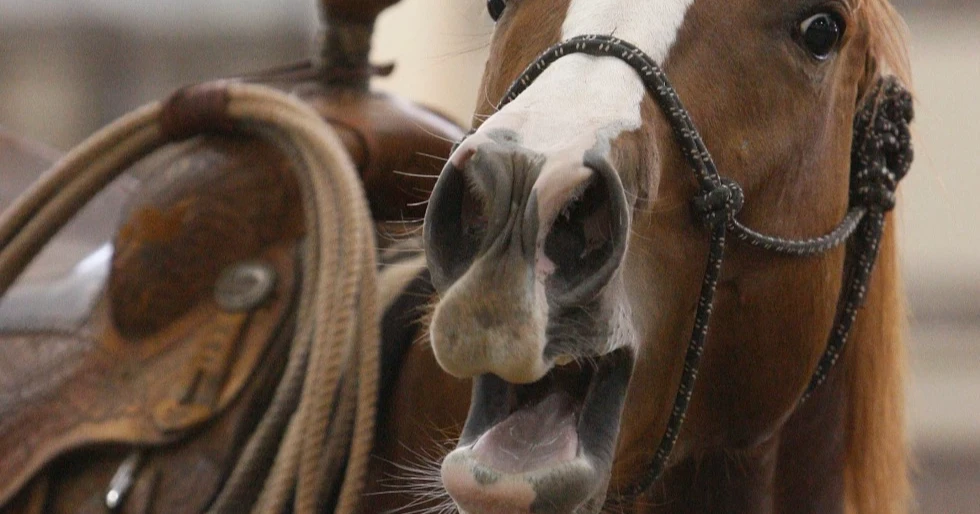
Horses often whinny to greet companions, call new friends or show excitement during feeding time. Scientists have long wondered how they create this special sound, known as a neigh.
A new study has now revealed the secret. Researchers found that a horse’s whinny is actually a mix of both low- and high-pitched sounds produced at the same time. The low tone is created when air passes over vibrating tissues in the voice box, similar to how humans speak or sing.
The high-pitched tone, however, had puzzled experts for years. Larger animals usually make deeper sounds because of their bigger vocal systems. But horses appear to break that rule.
According to the study published in the journal Current Biology, horses produce the higher pitch by whistling. Scientists used a tiny camera inserted through the animals’ noses to observe the voice box while they whinnied and made softer “nickering” sounds. They also scanned the vocal structures and tested airflow through voice boxes from deceased horses.
They discovered that as air vibrates the tissues in the voice box, an area just above tightens and leaves a small gap, allowing a whistle-like sound to escape. Unlike humans, who whistle with their mouths, horses whistle internally through their voice box.
Jenifer Nadeau of the University of Connecticut, who was not part of the study, said the finding was surprising and helps explain the unique tone of a neigh. Researchers also noted that while small rodents can whistle this way, horses are the first known large mammals to do so.
Alisa Herbst from Rutgers University said the two-tone call shows that a whinny is more complex than previously thought. Study author Elodie Mandel-Briefer of the University of Copenhagen added that the dual tones may help horses express different emotions at once when interacting socially.
Scientists are still exploring how this rare vocal ability evolved, as closely related animals like donkeys and zebras cannot produce the same high-pitched sound.