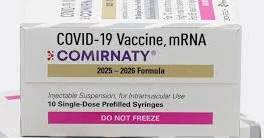
Deciding whether to get a COVID-19 vaccine is no longer a simple matter.
Your decision could depend on your age, health condition, insurance status, and whether you can find a healthcare provider or pharmacist willing to administer the shot.
What was once a routine seasonal vaccination has become more confusing due to new federal guidelines that have altered who is eligible, raising concerns about availability and insurance coverage.
What’s different this year?
The FDA has authorized updated COVID-19 vaccines from Pfizer, Moderna, and Novavax, but with stricter eligibility: the shots are now approved for adults 65 and older, and younger individuals with specific health conditions that put them at greater risk for severe illness.
This includes people with asthma, cancer, heart or lung conditions, obesity, depression, a history of smoking, or low physical activity levels.
According to Dr. Paul Sax from Brigham and Women’s Hospital, many people under 65 may still qualify due to common health issues.
Previously, based on advice from the CDC’s Advisory Committee on Immunization Practices (ACIP), the U.S. recommended annual COVID shots for everyone 6 months and older.
But earlier this year, Health Secretary Robert F. Kennedy Jr. dismissed all members of ACIP. Their replacements have yet to issue new guidance, creating uncertainty.
Where can you get the vaccine?
Most Americans typically go to pharmacies for their COVID-19 shots, but access may vary this fall.
In 19 states, pharmacists are legally allowed to administer only those vaccines officially recommended by ACIP, which means pharmacies in those states may not be able to offer COVID shots until the new committee weighs in.
Additionally, some pharmacists may be hesitant to give the vaccine to people outside the FDA’s approved groups, said Brigid Groves of the American Pharmacists Association.
Will your insurance cover it?
For seniors (65+), Medicare will cover the shots under the FDA’s updated approval.
For others, coverage is less certain. Many insurers and employers have been covering the full cost due to previous ACIP recommendations, but it's unclear if they will continue without updated guidance.
Some organizations, like Walmart and Kaiser Permanente, say they will still cover the shots for their employees and members.
Why might insurers still pay for it?
Vaccines help prevent costly hospitalizations and reduce the spread of illness among employees.
Employers also want to avoid health-related financial strain on their lower-wage workers, said Beth Umland of Mercer, a benefits consulting firm.
Without insurance, a single COVID shot could cost $150 or more.
Insurers also consider input from medical associations such as the American Medical Association, which continues to strongly recommend COVID vaccinations.
Dealing with mixed messages
In May, Kennedy announced that COVID-19 vaccines would no longer be recommended for healthy children and pregnant women.
This has been contradicted by leading medical groups:
The American College of Obstetricians and Gynecologists still advises pregnant women to get vaccinated.
The American Academy of Pediatrics continues to recommend COVID shots for children aged 6 months to 2 years.
Such conflicting advice has left patients confused, said Groves.
"People are wondering, ‘Should I even bother?’” she noted.
Do we still need COVID-19 vaccines?
Yes — especially in the fall, when cases may surge again.
Doctors recommend the shot for older adults and anyone with health risks.
Though most people now have some protection from past infections or previous vaccinations, annual boosters are still beneficial.
According to Andrew Pekosz of Johns Hopkins University, existing immunity means people’s bodies respond more quickly to infection, helping reduce hospitalizations.
"Population immunity is strong," he said, "but it’s not perfect, and it fades over time."