
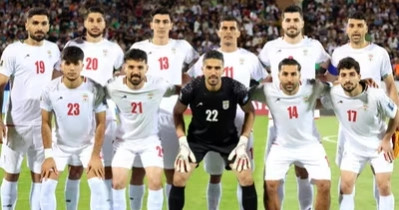
FIFA President Gianni Infantino confirmed that Iran will participate in the upcoming FIFA World Cup and play its scheduled matches in the United States.
FIFA’s conformation will now end speculation about a potential boycott or venue relocation amid the ongoing conflict in the Middle East.
Speaking after attending Iran’s 5-0 friendly victory over Costa Rica in Turkey on Tuesday, Infantino said the tournament schedule will proceed without alterations.
"Iran will be at the World Cup," Infantino said. "The matches will be played where they are supposed to be, according to the draw".
The announcement follows weeks of uncertainty surrounding the Iranian team's status due to the US-Israel war with Iran.
Earlier this month, the Iranian football federation stated it was negotiating with FIFA to relocate its matches to Mexico. Mexican President Claudia Sheinbaum had publicly offered to host the games if necessary.
Iran is scheduled to face New Zealand on June 15 and Belgium on June 21 in Los Angeles, followed by a match against Egypt in Seattle on June 26. The tournament, co-hosted by the U.S., Canada, and Mexico, begins June 11.
Mehdi Mohammad Nabi, vice president of the Iranian Football Federation, said the team will adhere to FIFA's regulations and expects host nations to do the same.
"Every host country has made commitments to FIFA and must honor them," Nabi said. He added that Infantino’s visit during his transit from Mexico to Qatar provided a significant boost to the players.
The geopolitical tension had recently spilled into public statements from government officials. U.S. President Donald Trump posted on social media earlier this month that while Iran was "welcome to the World Cup," he felt they should not participate "for their own life and safety".
In response, Iranian officials suggested the U.S. should forfeit its place in the tournament. Iranian Sports Minister Ahmad Donyamali also previously stated the country was not in a position to compete.
Prior to Tuesday's friendly match in Antalya, Iranian players held up photographs of damaged hospitals, historical buildings, and children killed in the war.