
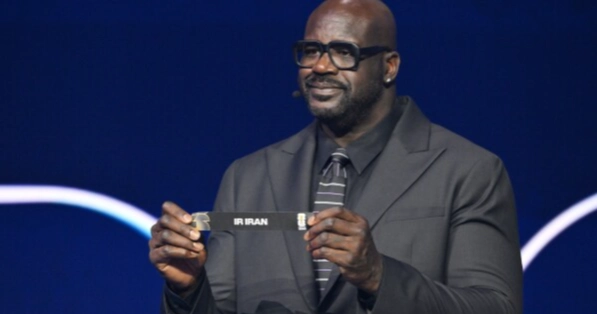
Iran will play at least one match of the upcoming World Cup on American soil, although Friday’s draw ensured the long-standing geopolitical foes will not meet in the group stage.
Iran, whose citizens remain under a U.S. travel ban and whose territory was hit by American airstrikes in June, will begin its tournament against New Zealand on June 15 in either Seattle or Inglewood, California. The team’s remaining group fixtures are expected to be held in Vancouver, Seattle or Inglewood, with FIFA set to finalize the full schedule on Saturday.
The United States, meanwhile, has been grouped with Australia, Paraguay and a European playoff winner still to be decided in March.
Iran’s involvement in the World Cup—co-hosted by the U.S., Canada and Mexico—has already stirred diplomatic friction. Last week, Tehran initially threatened to boycott the draw after several Iranian officials, including federation president Mehdi Taj and general secretary Hedayat Momebeni, were denied visas. The stance was later softened, with coach Amir Ghalenoei allowed to attend the event at the Kennedy Center in Washington, though his presence at the draw was not immediately confirmed.
$2 billion Athletics stadium in Las Vegas expected to debut by 2028
Iran is among 12 nations covered by the June 5 U.S. travel ban, which also includes fellow World Cup participant Haiti. While exemptions apply to teams and support personnel, spectators are not included.
The ban came as the Trump administration labeled Iran a “state sponsor of terrorism” and restricted entry to most visitors unless holding existing visas or qualifying under provisions for persecuted minorities. Later in June, the U.S. launched strikes using bunker-buster bombs and cruise missiles against Iran’s underground nuclear sites before declaring a ceasefire days into a 12-day conflict involving Israel.
Ranked 20th globally, Iran remains a major Asian football power preparing for its seventh World Cup appearance. Star forward Mehdi Taremi—formerly of Inter Milan and Porto, now at Olympiakos—heads the squad. Among its future opponents, relations with Egypt are the most strained, rooted in Cairo’s 1979 peace accord with Israel.
At the previous World Cup in Qatar, Iran’s campaign was overshadowed by unrest at home following the death of Mahsa Amini. Players refused to sing the national anthem before their opener against England, and clashes erupted between anti-government and pro-government fans. Many displayed “Woman, Life, Freedom” banners before Iran exited the tournament after a 1-0 loss to the U.S.
Source: AP