
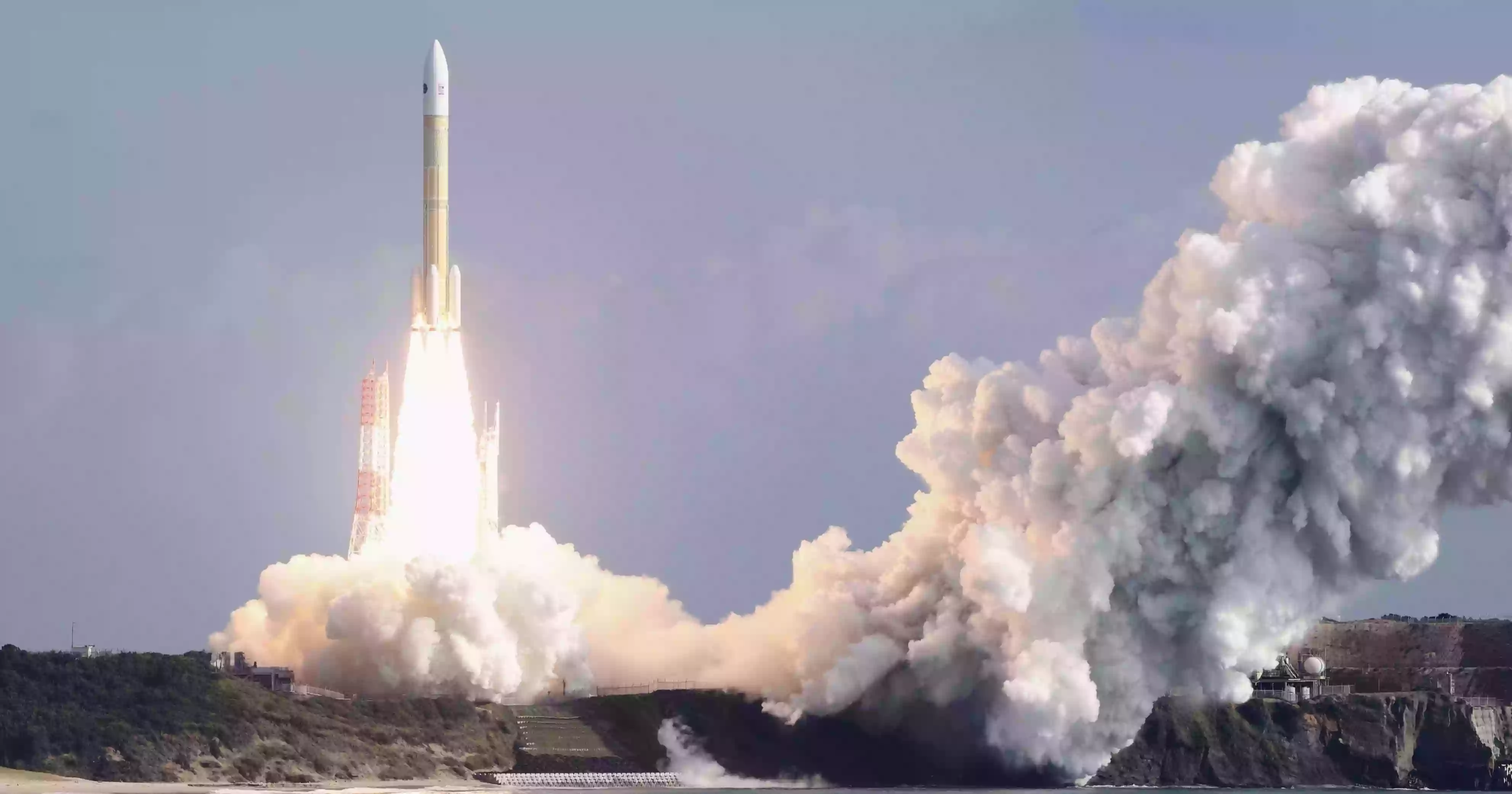
Japan’s space agency on Sunday successfully launched its new flagship H3 rocket, carrying an unmanned cargo spacecraft on its first mission to deliver supplies to the International Space Station (ISS).
The HTV-X1 supply ship lifted off aboard the No. 7 H3 rocket from the Tanegashima Space Center in southern Japan, the Japan Aerospace Exploration Agency (JAXA) confirmed. The spacecraft later separated from the rocket and entered its intended orbit.
If the mission proceeds as planned, the craft will reach the ISS within the next few days. Japanese astronaut Kimiya Yui, currently stationed on the orbiting laboratory, is expected to capture the cargo ship using the station’s robotic arm early Thursday.
The HTV-X is the successor to JAXA’s previous H-II Transfer Vehicle, known as Kounotori (or “stork” in Japanese), which completed nine ISS resupply missions between 2009 and 2020.
The upgraded spacecraft can carry larger payloads and provide power during transit, allowing safe transport of cell cultures and other sensitive laboratory materials requiring cold storage. Once docked, the HTV-X can remain attached to the ISS for up to six months to deliver supplies and collect waste. After departure, it will conduct additional technical missions for around three months while in orbit.
Pakistan announces ‘Army Rocket Force’ after operation Sindoor
The H3 rocket replaces Japan’s long-running H-2A as the country’s main launch vehicle. Designed to be more cost competitive in the expanding global space industry, the H-2A made its final flight in June.
Japan considers a reliable and commercially viable launch capability vital to its space strategy and national security. The H3 has now completed six straight successful flights, following a failed first launch in 2023 when the rocket was destroyed along with its payload.
Source: AP