OpenAI has avoided a potentially damaging legal setback in its high-profile dispute with Elon Musk, but the courtroom battle has left reputational dents on both sides as the artificial intelligence industry faces growing scrutiny.
A federal jury in Oakland ruled Monday that Musk filed his lawsuit too late, missing a statutory deadline, effectively handing OpenAI a victory after a three-week trial that featured extensive evidence and testimony from prominent figures in the tech world. The jury deliberated for less than two hours before reaching its decision.
The verdict allows the ChatGPT maker, valued at around $852 billion, to stay on course for what could become one of the largest initial public offerings in history. However, the proceedings exposed internal tensions, personal rivalries and governance concerns at the heart of one of the world’s most influential AI companies.
Musk had sought to remove OpenAI CEO Sam Altman and accused the company’s leadership — including co-founder Greg Brockman — of abandoning its original nonprofit mission to develop AI for the benefit of humanity. Altman, in response, alleged Musk was attempting to undermine OpenAI to advance his own AI venture.
Despite the legal outcome, testimony during the trial raised questions about Altman’s leadership. Several witnesses described him as lacking transparency, with former board members Helen Toner and Tasha McCauley citing concerns about his truthfulness. The trial also revisited Altman’s brief ouster from OpenAI’s board in 2023 before his swift reinstatement.
Musk, reacting sharply to the ruling, said he would appeal and criticized Judge Yvonne Gonzalez Rogers, calling her a “terrible activist Oakland judge, who simply used the jury as a fig leaf” to set a harmful precedent. “She just handed out a free license to loot charities if you can keep the looting quiet for a few years!” Musk wrote on his platform X. The decision marks his second major courtroom loss in less than two months.
Beyond the legal clash, the case underscored broader concerns about the future of artificial intelligence and the small circle of powerful individuals shaping its development.
“The trial was a reminder … of how much the future of AI still depends on a remarkably small group of powerful tech figures and their personal rivalries,” said Sarah Kreps, director of Cornell University’s Tech Policy Institute. “The trial highlighted not just a dispute between Musk and Altman, but a broader disconnect between the people building these systems and many of the people increasingly expected to live and work alongside them."
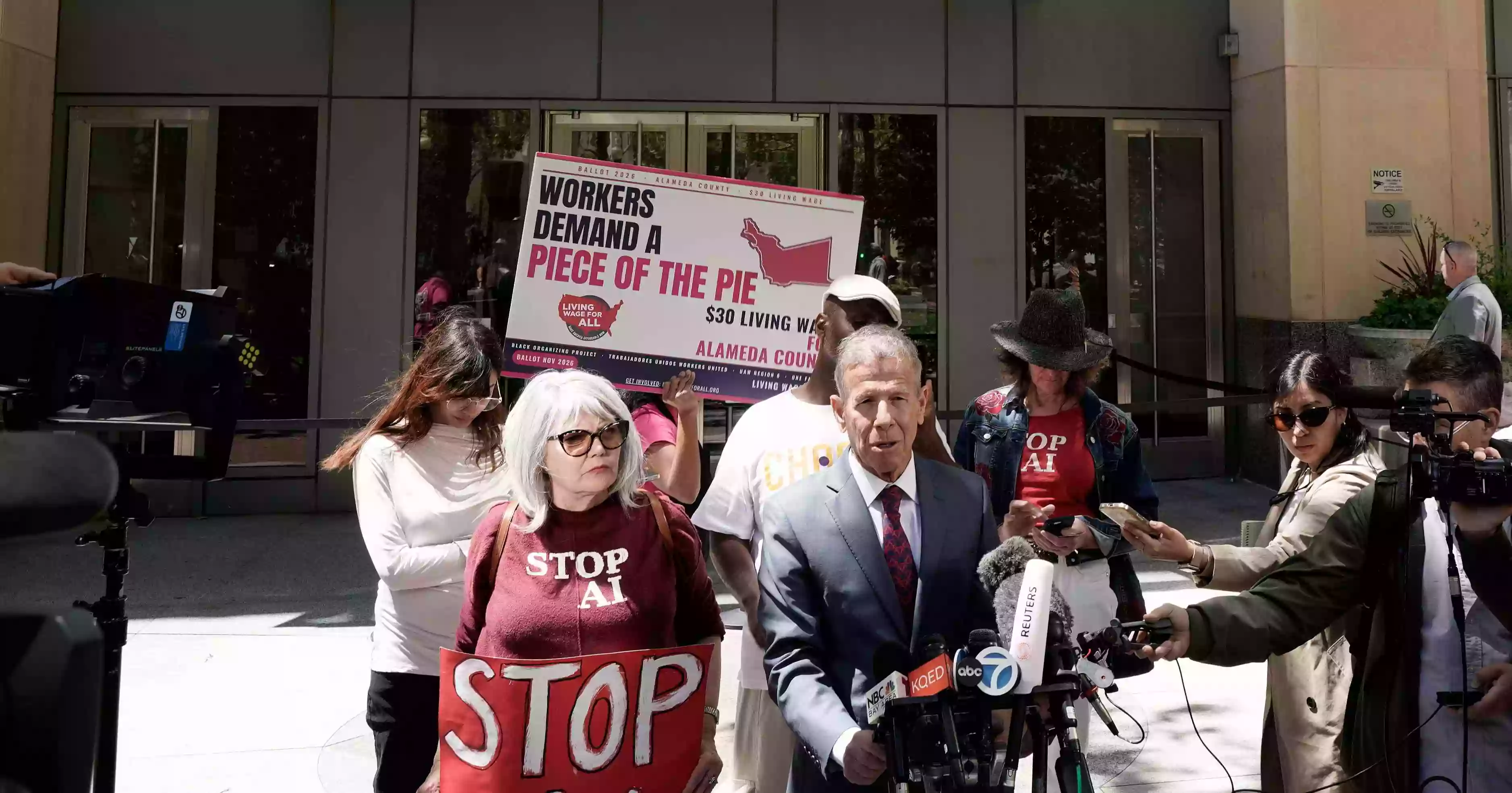
Although the judge sought to keep the proceedings focused on legal issues rather than AI risks, concerns about job losses, mental health effects and even existential threats formed a backdrop throughout the trial. Protesters regularly gathered outside the courthouse, criticizing both Musk and Altman and warning about the influence of billionaire-led tech companies.
“This is a funny microcosm of this moment where we have this hugely important technology that’s being developed by for-profit corporations run by people like Musk and Altman and not as the part of some government-led initiative,” said Columbia Law School professor Dorothy Lund.
The trial also revealed behind-the-scenes communications within Silicon Valley, including emails, diary entries and text messages that highlighted internal disputes and, at times, became fodder for online satire.
OpenAI dismissed Musk’s claims as unfounded, characterizing them as an attempt to slow its rapid expansion while boosting his own AI company, now part of SpaceX.
Meanwhile, both OpenAI and Musk’s ventures — along with AI firm Anthropic, founded by former OpenAI leaders — are preparing for major IPOs, signaling continued momentum in the sector despite the controversy.
“It’s a lot of dirty laundry that doesn’t look very appealing, I suppose, and so that may hurt their reputation and may have downstream effects on all kinds of things that you can’t even anticipate,” said University of Richmond law professor Carl Tobias. “But you know, AI is likely to come forward and continue even if it isn’t OpenAI.”