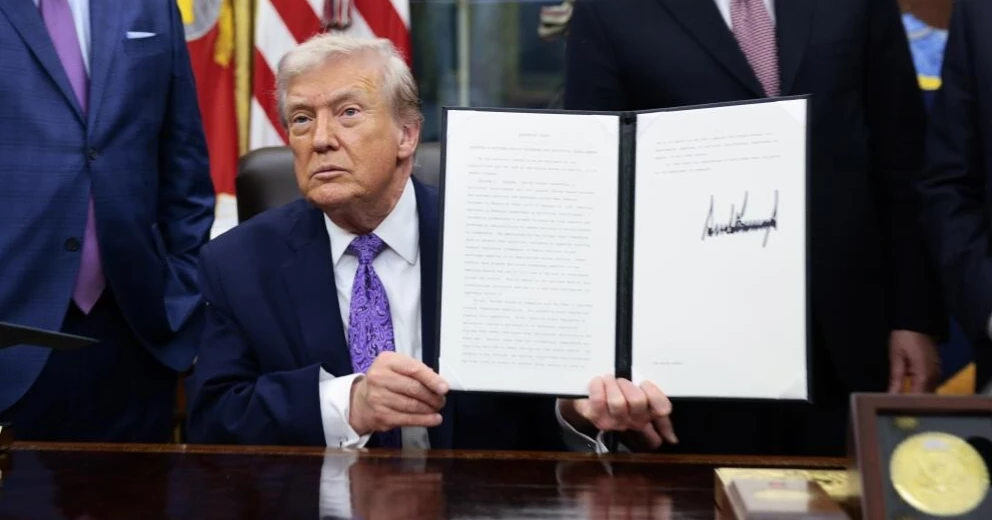
US President Donald Trump signed an executive order Thursday aimed at curbing state-level regulations on artificial intelligence, arguing that patchwork rules across the U.S. could slow innovation and let China gain an edge in AI development.
Currently, four states — California, Colorado, Texas, and Utah — have passed laws requiring transparency from companies, limiting certain data collection, and addressing AI risks such as discrimination in hiring, lending, and healthcare decisions. Some states also regulate AI’s use in elections and for nonconsensual content.
Trump’s order directs federal agencies to identify burdensome state AI regulations and pressure states not to adopt new rules, including by threatening to withhold federal funding or challenging the laws in court. It also calls for a federal framework to preempt state AI laws, though it excludes some protections, such as child safety measures and state government AI use.
Critics, including consumer rights groups and civil liberties advocates, say the order benefits big tech by eliminating state oversight. “Big Tech has successfully leveraged those around the president to pass a federal moratorium that aims to wipe out bipartisan AI safeguards,” said Liana Keesing of Issue One. Children’s advocacy groups also warned the order could put younger generations at risk in an AI-driven world.
Legal challenges are expected. Colorado Attorney General Phil Weiser and California state lawmakers have signaled they will sue if the order is enforced, and Connecticut leaders plan to continue advancing state AI regulations. Observers note that the order may overstep presidential authority in preempting state laws.