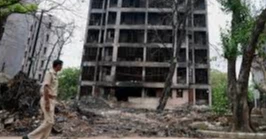
Initial findings from the investigation into last month’s Air India crash suggest that the aircraft’s engines lost power shortly after takeoff due to the fuel control switches being turned off.
According to a report released Saturday by India’s Aircraft Accident Investigation Bureau, one of the pilots was recorded asking the other why the fuel had been shut off during the plane’s final moments. The second pilot responded that he had not done so.
The crash occurred on June 12, when a Boeing 787-8 Dreamliner operated by Air India went down in the city of Ahmedabad. At least 260 people, including 19 on the ground, were killed. Only one passenger survived, making it one of the deadliest air disasters in Indian aviation history.
The report is based on data retrieved from the aircraft’s black boxes — which include both the cockpit voice recorder (CVR) and the flight data recorder (FDR).
What Are Black Boxes?
Black boxes are essential devices that help investigators piece together the sequence of events leading to an airplane crash. Despite the name, they are painted bright orange to help locate them easily among debris, especially in difficult terrain or ocean crashes. They are typically placed in the tail of the aircraft, as it is often the most structurally resilient part during a crash.
Role of the Cockpit Voice Recorder
The CVR captures audio from the cockpit, including pilot conversations, radio transmissions, engine sounds, and alarms. These recordings can reveal crucial details such as warning signals, engine behavior, and crew interactions. Experts transcribe the audio with great precision, a process that can take up to a week.
Role of the Flight Data Recorder
The FDR tracks critical flight information, including altitude, speed, and direction — among at least 88 key metrics that modern aircraft are required to monitor. Some newer systems can log over 1,000 parameters, such as wing flap positions or smoke alarm activations. Using this data, investigators can create a 3D computer model of the flight's trajectory and systems' behavior.
Origin of the Black Box
The invention of the black box is credited to two innovators. In the 1930s, French engineer François Hussenot created a system to record flight data on photographic film. Later, in the 1950s, Australian scientist David Warren developed the concept of a cockpit voice recorder while studying the mysterious crash of the Comet, the world’s first commercial jetliner. Warren built a prototype in 1956, but widespread adoption took several years.
Why Is It Called a “Black Box”?
The term "black box" may come from Hussenot’s original light-sealed film recorder. Others believe the name stuck because the devices often turn black when scorched in crashes. Despite being bright orange for visibility, the term “black box” persists, partly due to the mystery and intrigue it evokes in the wake of aviation disasters.