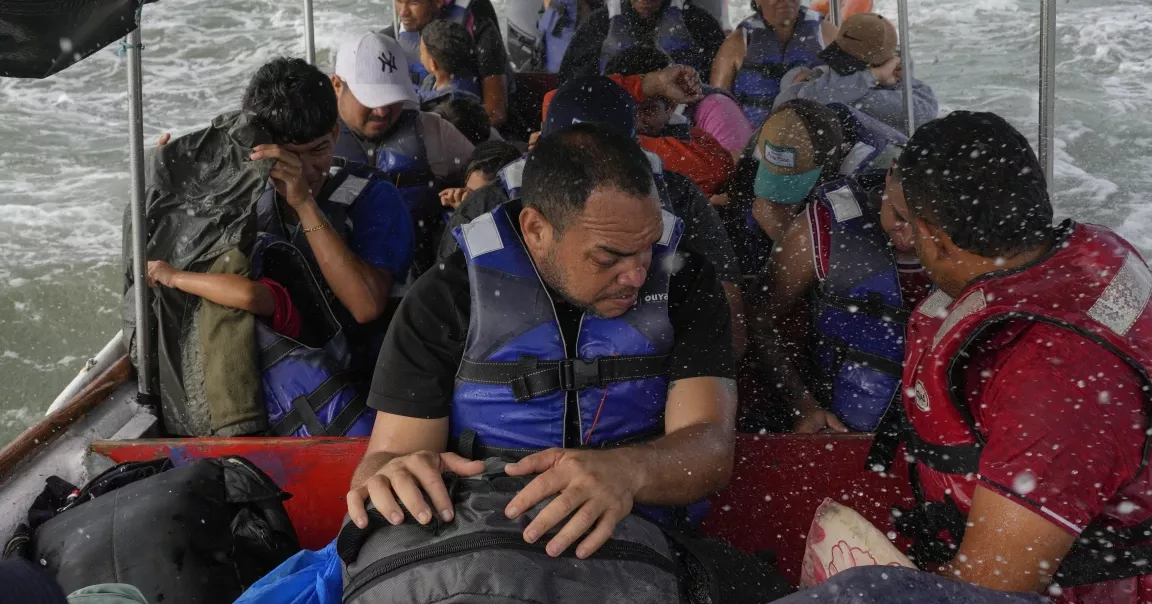
More than 14,000 mostly Venezuelan migrants who had set their sights on reaching the United States have reversed direction and headed south since U.S. President Donald Trump’s immigration crackdown took effect, according to a report released Friday by the governments of Colombia, Panama, and Costa Rica.
The trend, described as “reverse flow” migration, is primarily made up of Venezuelans who fled years of economic, social, and political turmoil at home, only to find that U.S. policies now bar asylum-seekers.
Migration through the dangerous Darien Gap between Colombia and Panama peaked in 2023 with over half a million crossings. While the pace slowed in 2024, it has nearly halted this year. The joint report, backed by the U.N. High Commissioner for Human Rights, said northbound migration has dropped 97% in 2025.
Interviews with migrants heading back south in Costa Rica, Panama, and Colombia showed that 97% were Venezuelans, and nearly half said they planned to return to their home country. Most said they had no choice but to turn back because they could no longer enter the U.S. legally.
Since 2017, around 8 million Venezuelans have fled the crisis. Many initially sought refuge in South American nations such as Colombia, Peru, Ecuador, and Chile, before a large wave shifted toward the U.S. starting in 2021, braving the perilous Darien route.
During the Biden administration, a U.S. government mobile app was the main pathway for asylum-seekers. But Trump scrapped the app on his first day in office, leaving thousands stranded in Mexico. Those who had continued their journey north when the new restrictions began are now heading back. A quarter of those interviewed plan to settle in Colombia, while others were unsure of their destination.
Colombia and other South American nations have long appealed for international assistance to manage the Venezuelan migrant influx, even before many began moving toward the U.S. Meanwhile, Venezuela’s political and economic crisis continues unabated.
Migrants retracing their steps face even greater risks, the report noted. Many lack money or jobs, and are dropped into areas dominated by criminal groups that increasingly prey on them. “Most of these people are already victims of human rights abuses," said Scott Campbell, a U.N. human rights representative in Colombia. “We urge authorities to aid people in this reverse migration to prevent them from being exploited or falling into trafficking networks run by illegal armed groups.”
The development marks a dramatic reversal in one of the world’s largest migration movements.
Migrants heading south typically take buses through Mexico and Central America to reach Panama, then pay between $260 and $280 for overcrowded boat rides back to Colombia.
Two routes are used: one across the Caribbean Sea, where they land in Necocli, Colombia — the same town where many first entered the Darien Gap; the other along the Pacific coast of Panama and Colombia, ending in remote towns or Buenaventura. Colombia’s Ombudsman’s Office estimates about 450 migrants have taken the latter, more hazardous path, while the U.N. has recorded cases of people being scammed, stranded, or suffering boat accidents, arriving exhausted and vulnerable.
The Pacific region remains one of Colombia’s most violent zones, where armed groups fill the void left by weak state presence.