
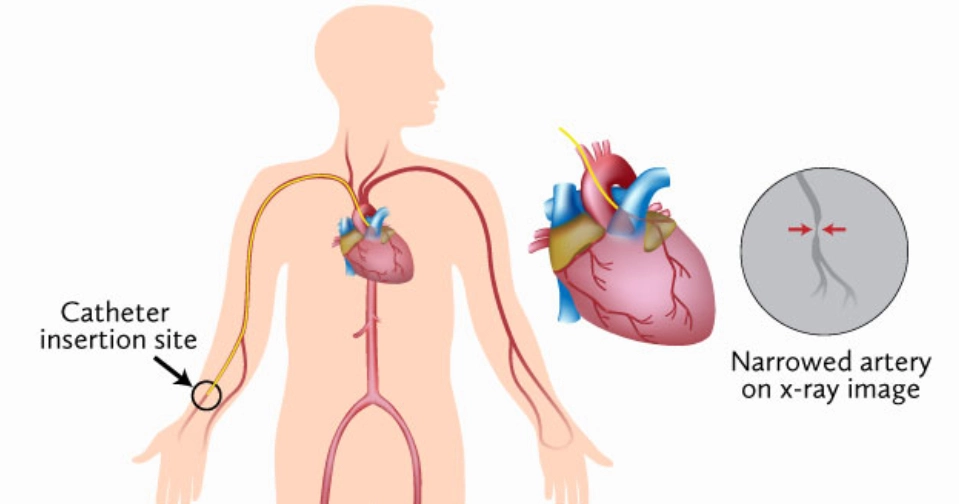
Wearing a white coat and a face mask, Indonesian trainee Fadli Ilhami followed the instructions of a Chinese doctor who was showing him how to operate a coronary angiography.
Fadli, 32, is one of nine Indonesian doctors who relocated to Lanzhou, capital of northwest China's Gansu Province, to participate in a one-year fellowship and medical specialists training program offered by the Indonesian Ministry of Health and the First Hospital of Lanzhou University.
Fadli said that he has been provided with a valuable opportunity for further study since he could deal with a variety of different cases in Lanzhou, helping him gain both experience and confidence in the field of percutaneous coronary intervention (PCI).
"I'm deeply motivated to master PCI, with a clear vision of becoming a seasoned expert in this field," said Fadli.
The hospital has arranged experienced mentors for one-on-one guidance, combining theory and practice to boost the specialist skills of trainees, said Bai Ming, vice president at the hospital and also a leading expert in treating cardiovascular diseases.
Bai's team has persistently carried out in-depth research and extensive practice in the field of interventional cardiology over a long period of time. The heart center at this hospital is considered the premier cardiovascular care hub in northwest China.
"The goal is to train them to master diagnostic and therapeutic aspects of cardiovascular interventional procedures," Bai noted.
According to the Indonesian government, cardiovascular diseases claim around 500,000 lives each year in that country. One reason for this high mortality rate in Indonesia is the shortage of heart specialists trained in interventional cardiology.
Santi Putri Ramdhani, 40, also an Indonesian trainee, is confident she will be able to perform operations in her country once she returns to Indonesia.
"There are so many cases I have already performed in this hospital. All of our mentors are very supportive and they are very generous to share their knowledge, including technical skills, clinical judgment and decision-making," said Santi.
Xu Jizhe, an associate chief physician at the hospital and a mentor in the training program, offered knowledge regarding foundational theories and core technologies of PCI to trainees.
Fundamental procedures such as preoperative preparation and patient surface cleaning and disinfection, as well as advanced technological interventions including stent implantation, have been included in the training, which will last until next March, Xu said.
He added that, in accordance with training requirements, each trainee needs to participate in and study 300 cases of cardiovascular interventional procedures, and so far, they have finished over 200 cases.
Hariman Kristian Sitanggang, another trainee from Indonesia, expressed his gratitude to the mentoring team and voiced hope that more clinic programs would be on offer for Indonesian doctors in the future, since this kind of program is a crucial step toward reducing the number of deaths caused by cardiovascular diseases.
"The Chinese doctors are very professional and patient. They not only taught us really helpful medical knowledge, but also treated us like a family, which meant a lot to us," he said.
The trainees told Xinhua that they look forward to treating patients with cardiovascular diseases after returning home armed with medical techniques they learned in China, which should enable them to save more lives.