
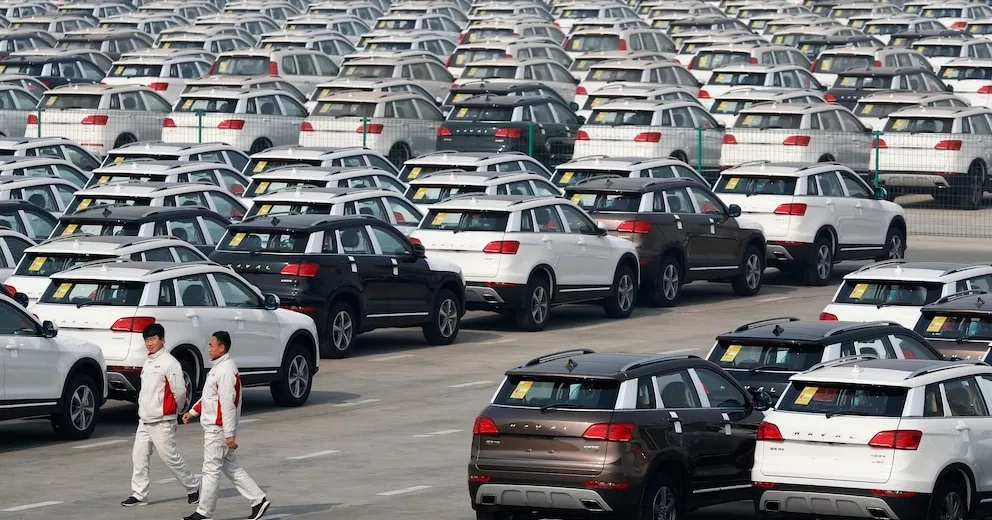
China’s passenger car sales grew at a slower pace in October, as the country began scaling back trade-in subsidies and tax breaks that had fueled demand for electric and hybrid vehicles over the past two years, according to industry data released Tuesday.
The China Association of Automobile Manufacturers (CAAM) reported a 4.4% year-on-year rise in passenger car sales — down sharply from 11.2% in September and 15.1% in August. Despite the slowdown, exports of electric and plug-in hybrid vehicles surged, doubling from a year earlier to about 250,000 units as Chinese carmakers expanded overseas.
China’s auto sector, the world’s largest, had been bolstered by government incentives encouraging drivers to trade in older vehicles for EVs. However, some provinces and cities have recently reduced these subsidies, and it remains uncertain whether major national programs will continue next year. Authorities are also expected to halve tax exemptions for electric and hybrid vehicles in 2026.
Major automakers felt the pinch in October. Tesla’s sales in China fell nearly 36% from a year earlier to 26,006 vehicles, down from more than 71,000 in September, according to the China Passenger Car Association (CPCA). BYD’s sales also dropped by about 12% to 441,706 vehicles, as it ramps up expansion into international markets like the UK to counter slower domestic demand.
“The phasing out of trade-in subsidies in some regions has caused domestic sales to cool,” said Claire Yuan, director of corporate ratings for China autos at S&P Global Ratings. She added that even if subsidies are extended, their impact will likely be weaker, with total passenger and light commercial vehicle sales expected to decline in 2026.
Analysts said fierce competition and oversupply are driving carmakers to keep prices low, pressuring profits across the industry. BYD’s domestic market share slipped, while rivals such as Geely, XPeng, and Leapmotor gained ground.
Despite weaker home demand, China’s EV exports remain strong. Consultancy AlixPartners predicts Chinese carmakers could capture 30% of the global vehicle market by 2030, up from 21% last year.