
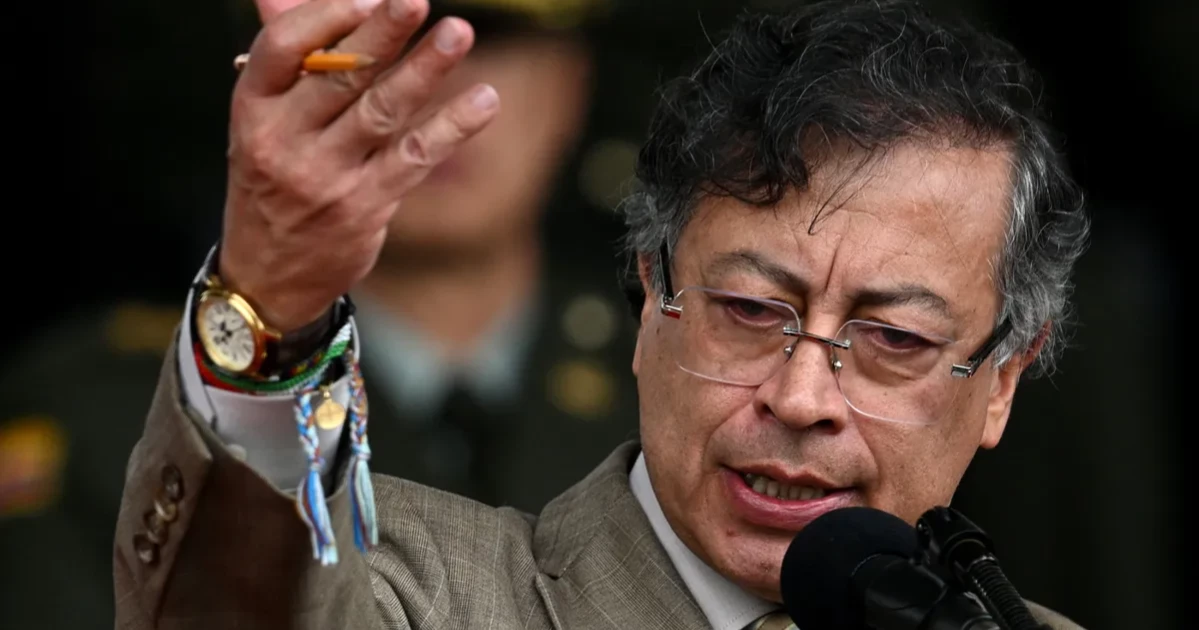
Colombia’s government has declared an economic state of emergency, allowing President Gustavo Petro’s administration to impose taxes by decree as the country faces rising debts and the need to fund hospitals and the military.
Petro issued the decree late Monday after his administration failed to secure congressional approval for a tax bill that would have raised $4 billion for the 2026 budget, a year of presidential and congressional elections.
Public spending under Petro, elected in 2022, has surged beyond levels seen during the pandemic, with the national budget reaching approximately $134 billion in 2025. The decree cites the need for funds to cover fuel subsidies, health insurance payments, and about $700 million in military-related infrastructure to counter drone attacks from rebel groups.
The government has not yet published the specific taxes to be imposed. Leaked documents reported by local media indicate plans for new wealth taxes on businesses and individuals, as well as higher sales taxes on alcohol, including rum and wine.
Business groups have criticized the decree as authoritarian and a way to bypass Congress. Bruce Mac Master, president of Colombia’s National Association of Industrialists, called it a “flagrant abuse of the rule of law” on social media.
Many analysts expect the Constitutional Court to overturn the decree, noting that Colombian law allows a state of economic emergency only in cases of “grave, imminent and unexpected” threats to the economy.
Jorge Restrepo, an economics professor at Bogota’s Javeriana University, said it will be difficult for the government to justify the decree. “This was not an unexpected situation … like a war or natural disaster,” he said, referring to the budget deficit. “We knew there was a fiscal crisis brewing since the middle of last year.”