European leaders on Monday said US President Donald Trump’s sudden decision to pull thousands of American troops from Germany came as a surprise, but also reinforces the idea that Europe must take more responsibility for its own security.
The Pentagon last week announced plans to withdraw about 5,000 troops from Germany. However, Trump later told reporters that the reduction would be much larger, saying, “we’re going to cut way down. And we’re cutting a lot further than 5,000,” without giving further details.
The move caught NATO allies off guard. It comes amid rising tensions between Trump and German Chancellor Friedrich Merz over the US-Israeli war on Iran, as well as Trump’s frustration over what he sees as limited European involvement in Middle East conflicts.
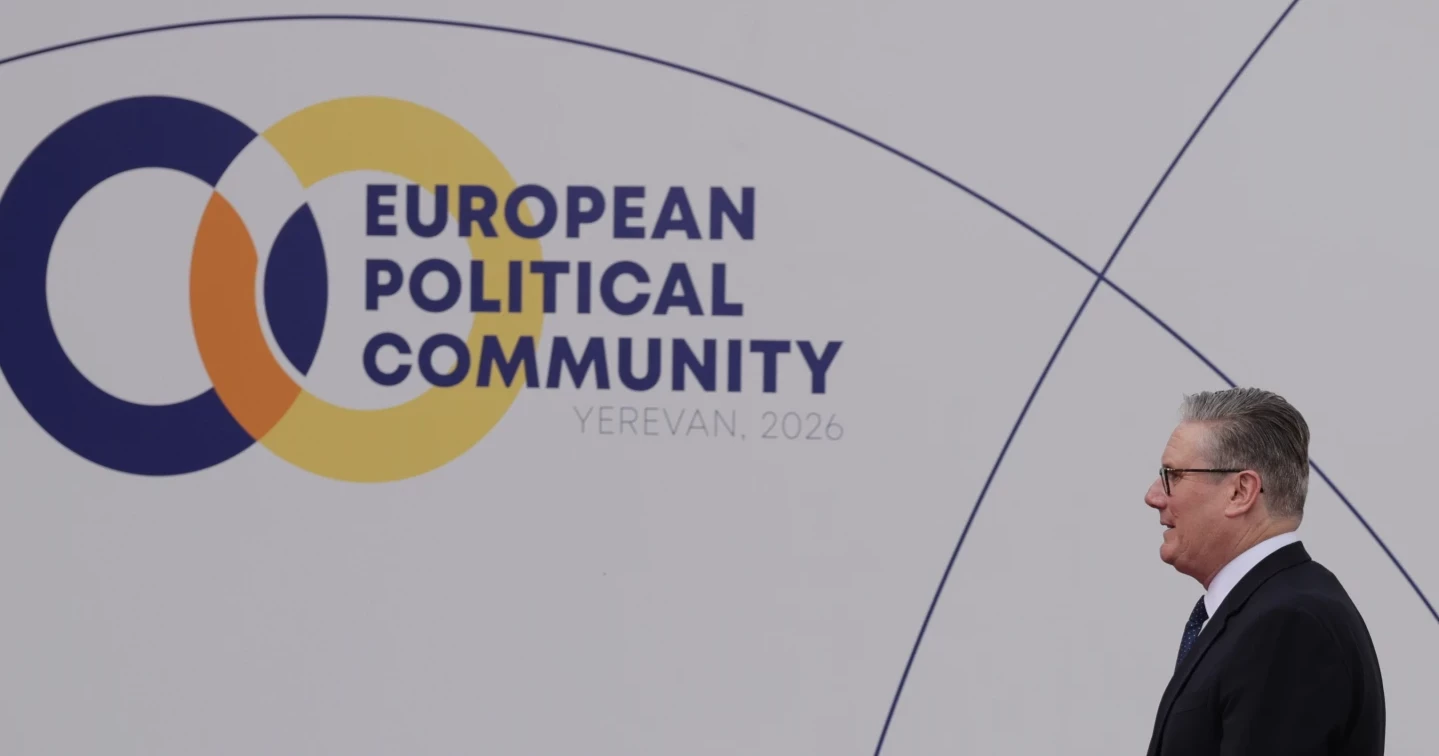
Norwegian Prime Minister Jonas Gahr Støre downplayed concerns about the scale of the withdrawal. Speaking in Yerevan, where European leaders are attending a summit, he said Europe is expected to take greater responsibility for its own security.
“I wouldn’t exaggerate that because I think we are expecting that Europe is taking more charge of its own security,” he said, adding that the issue should be managed “in a harmonious way inside the framework of NATO.”
EU foreign policy chief Kaja Kallas said troop withdrawal discussions from Europe have been ongoing, but the timing of the announcement was unexpected.
“This shows that we really need to strengthen the European pillar in NATO,” she said.
Asked whether Trump’s decision was aimed at punishing Merz after his criticism of US handling of Iran negotiations, Kallas said she could not speculate on the US president’s intentions. “I don’t see into the head of President Trump, so he has to explain it himself,” she said.
NATO spokesperson Allison Hart said the alliance is working with Washington to understand the details of the planned changes to US troop deployment in Germany.
European allies and Canada have been aware since Trump returned to office that US forces could be reduced in Europe. Some troops were already withdrawn from Romania in October. However, US officials had previously said any changes would be coordinated with NATO to avoid security gaps.
NATO Secretary-General Mark Rutte downplayed the impact of the move, noting some US dissatisfaction with European support for the Iran conflict.
France, Spain and the United Kingdom have limited US use of their military bases for operations related to Iran, while Spain has also restricted airspace access.
Rutte said European countries had taken note of Washington’s concerns and were acting accordingly. He added that some nations were positioning military assets closer to potential areas of operation, though he gave no details.
European officials have also said they would not take part in policing the Strait of Hormuz, a key global energy route, until the conflict ends.