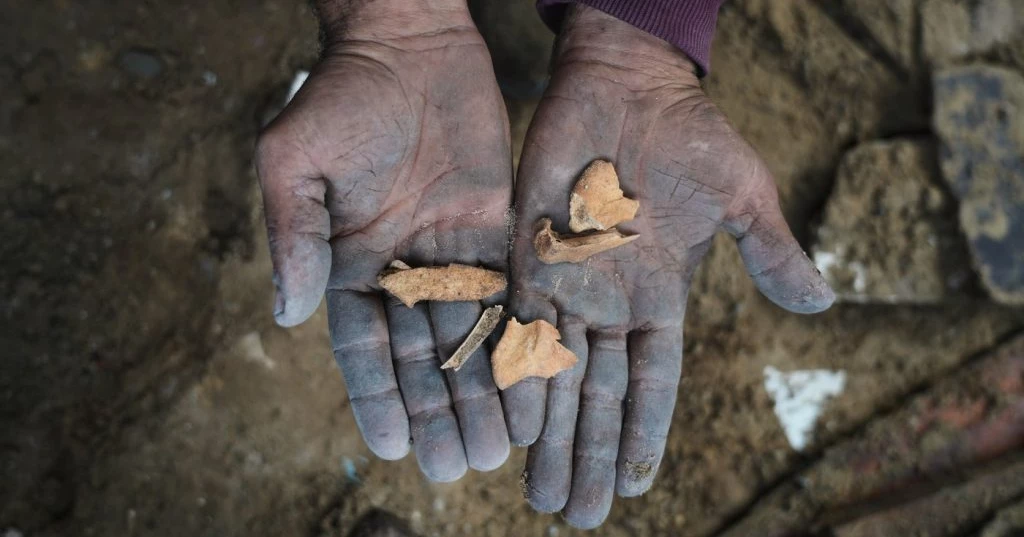
Mahmoud Hammad, a father from Gaza City, is painstakingly digging through the rubble of his destroyed home, searching for the remains of his wife, five children, and unborn daughter who were killed more than two years ago in an Israeli airstrike.
Using picks, shovels, and his hands, Hammad sifts dirt through a large sieve, collecting tiny bones that he believes belong to his unborn baby girl. “I won’t find them all,” he said, describing months of labor in the debris of what once was his family home.
Around 8,000 people remain buried under rubble across Gaza, according to the Health Ministry, as retrieving bodies during Israel’s military campaign was nearly impossible. Since a ceasefire deal in October, recovery efforts have increased, though they are hampered by a lack of heavy equipment and ongoing military control in parts of the territory.
Hammad survived the December 6, 2023, airstrike that destroyed the six-story building where he lived with his family in the Sabra neighborhood. His wife, nine months pregnant, and their children aged 8 to 16 were killed along with his brother, sister-in-law, and their four children. Hammad was hospitalized with multiple injuries but returned to the ruins to continue searching for his family.
Since the ceasefire, more than 700 bodies have been recovered from collapsed buildings, bringing Gaza’s confirmed death toll to over 72,000. The UN reports that Israeli bombardment destroyed or damaged 81 percent of Gaza’s 250,000 buildings, leaving the enclave with roughly 61 million tons of rubble — a volume equivalent to 15 Great Pyramids of Giza.
Rescue operations remain slow due to restrictions on heavy machinery and ongoing Israeli military presence. Hammad said discovering the fragments of his unborn daughter has given him hope of eventually recovering and burying the rest of his family properly.