
Greenland’s remote location, harsh climate and lack of basic infrastructure have so far prevented the development of any commercial mine for rare earth elements, raising doubts over President Donald Trump’s push to secure control of the Arctic island as part of his strategy to break China’s dominance in the global supply chain.
Trump has made rare earths a priority after China sharply restricted exports following U.S. tariffs imposed last spring. The Trump administration has invested hundreds of millions of dollars and taken stakes in several companies, while the president has renewed his call to wrest control of Greenland from Denmark.
“We are going to do something on Greenland whether they like it or not,” Trump said on Friday.
However, experts say Greenland may not be able to produce rare earths for many years, if at all. Although the island is believed to hold around 1.5 million tons of rare earth deposits, most projects remain at an early exploration stage. Analysts say Trump’s interest may be driven more by geopolitical concerns over Russian and Chinese influence in the Arctic than by the immediate need for minerals such as neodymium and terbium, which are used in electric vehicles, wind turbines, robots and fighter jets.
“The fixation on Greenland has always been more about geopolitical posturing than a realistic supply solution,” said Tracy Hughes, founder of the Critical Minerals Institute.
Trump acknowledged the strategic angle, saying Washington does not want Russia or China expanding their presence in the region.
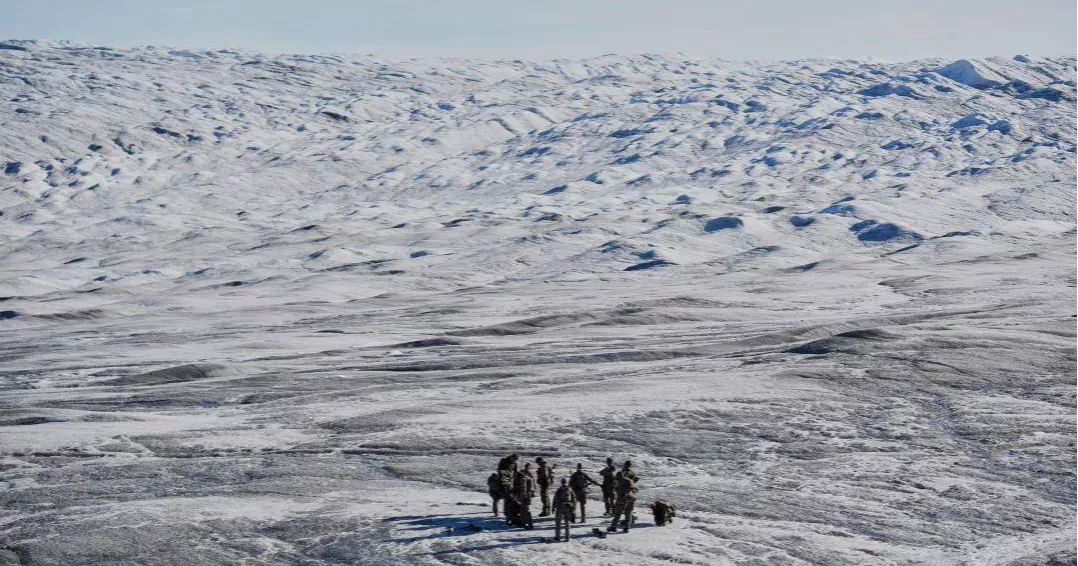
Mining experts say Greenland’s remoteness, lack of roads and railways, need for local power generation and shortage of skilled manpower make large-scale mining extremely difficult. Environmental risks also pose major challenges in the fragile Arctic ecosystem, where toxic chemicals used in processing and the presence of radioactive uranium could threaten Greenland’s growing tourism industry.
Geologists note that Greenland’s rare earths are locked in complex rock formations known as eudialyte, from which no profitable extraction method has yet been developed.
Industry specialists argue the United States should instead focus on more advanced mining projects in the U.S. and allied countries such as Australia, which are closer to commercial production.
Although some companies have announced plans to build pilot plants in Greenland, analysts say they remain far from opening a full-scale mine and would need to raise hundreds of millions of dollars.
With more than 90 percent of the world’s rare earths currently coming from China, experts warn that securing alternative supplies will take years and require sustained investment in more accessible and economically viable projects.