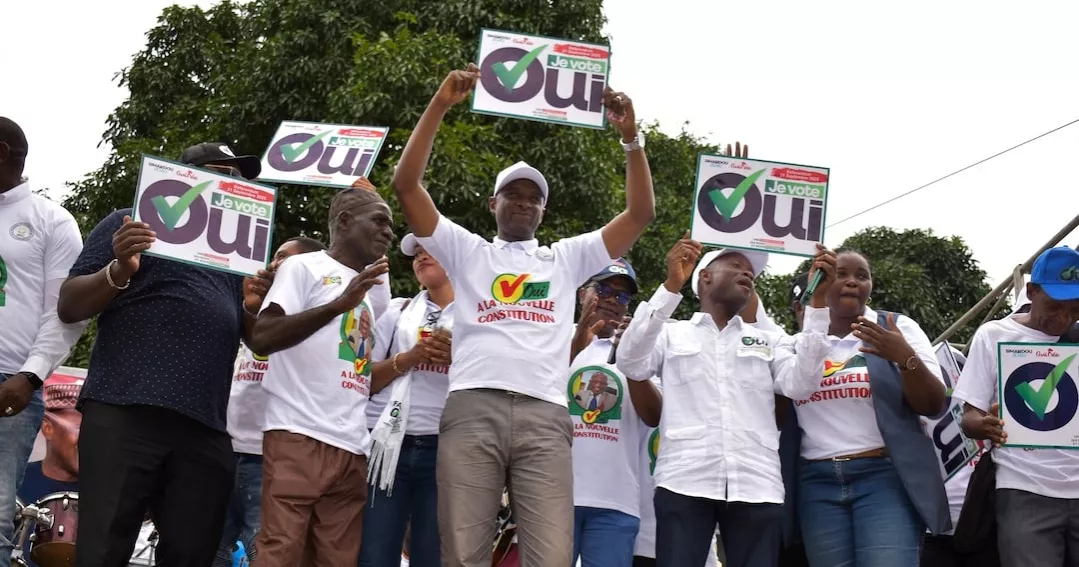
Polls opened in Guinea on Sunday for a constitutional referendum that could allow the country’s junta leader, Gen. Mamadi Doumbouya, to contest the presidency, four years after seizing power in a coup and would transition the African nation from military to civilian rule.
The referendum, seen as a crucial step in Guinea’s transition from military to civilian rule, is drawing close scrutiny across West Africa, a region increasingly dominated by juntas. Critics, however, denounce the vote as a “power grab” by Doumbouya. Elections are scheduled for December.
Some 6.7 million eligible voters to cast a “yes” or “no” vote on a new constitution that would lengthen the presidential term from five to seven years, with the draft constitution requiring at least 50% turnout to be validated. Polling stations opened at 7 a.m. and will close at 6 p.m.
In Conakry, voters queued early, many in festive attire, though the presence of tanks and military barricades underscored the junta’s dominance. The campaign has been marked by rallies, concerts and prayers backing Doumbouya, but opposition voices have been absent. More than 50 political parties were dissolved last year, and three major opposition groups were suspended weeks before the vote.
The draft constitution extends presidential terms from five to seven years, renewable twice, and permits junta members to run for office. It also introduces a Senate and allows independent candidates.
Rights groups accuse the regime of silencing dissent, disappearing opponents and restricting media. Yet many Guineans credit Doumbouya with building roads and improving services, fueling speculation that he intends to seek the presidency.
“Today, the question is about the referendum,” said Gen. Amara Camara, Secretary-General to the Presidency. “When the time comes, we will talk about it.”