The acting mayor of Hebron has warned that Israel’s latest legal and administrative measures in the occupied West Bank amount to the effective end of meaningful negotiations with the Palestinians, saying they leave local authorities powerless and unprotected.
Asma al-Sharabati said recent decisions approved by Israel’s security cabinet would sideline Palestinian institutions from urban planning and development, even in areas officially under Palestinian administration. She described the move as “the end of the road” for the peace process, arguing that Palestinians were being excluded from decisions shaping their own cities.
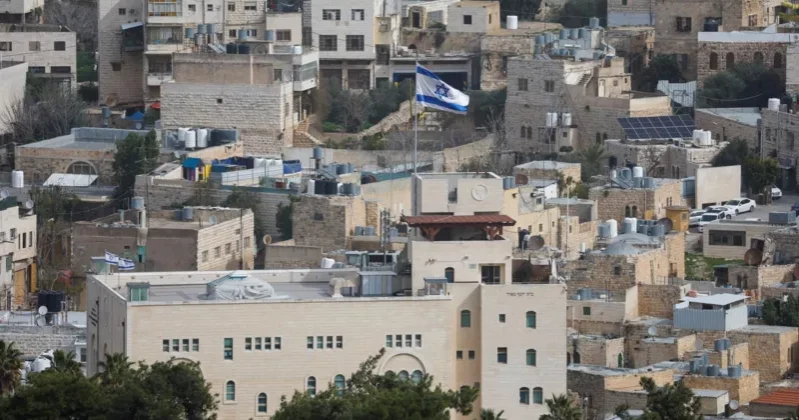
Hebron, a frequent flashpoint, is a deeply divided city where several hundred Israeli settlers live under heavy military protection among tens of thousands of Palestinians. Under arrangements set out in the Oslo Accords in the 1990s, parts of the city remain under Palestinian civil control, while others are overseen by Israel.
On Sunday, Israel approved sweeping changes that expand its authority beyond military occupation into civilian and municipal affairs in Palestinian-run areas. The measures also grant Israel broad powers over so-called heritage sites across the West Bank, citing the protection of water, environmental and archaeological resources.
Among the changes, Israel said it would assume planning authority at the Cave of the Patriarchs, one of Judaism’s holiest sites, which is located within Hebron’s Ibrahimi Mosque compound. Palestinian officials fear the new rules allow Israel to declare properties or land as historic sites and take control without Palestinian consent.
“Now they can simply declare any building ancient, and Palestinian authorities have no say at all in planning or development,” al-Sharabati said, adding that she learned of the details through Israeli media rather than formal notification.
Palestinian activist Issa Amro, who lives in the highly volatile H2 area of Hebron, said the measures marked a turning point. He argued that actions previously taken without a clear legal basis were now being formalised. “This is annexation without rights,” he said, warning that the status of the territory was being shifted from occupation to a unilateral legal claim.
Israel has also said it plans to provide municipal services directly to Jewish settlers in Hebron and to open up land ownership across the West Bank to private Israeli citizens. Palestinians are prohibited from selling property to non-Palestinians under both Jordanian-era and Palestinian laws, and activists warn that planned publication of land registry data could expose sellers to serious risks.
The West Bank, along with Israeli-annexed East Jerusalem, is home to more than 700,000 Israeli settlers. Palestinians seek the territory for a future independent state, together with the Gaza Strip. The settlements are considered illegal under international law.
Israeli Finance Minister Bezalel Smotrich, who oversees settlement policy, said the measures were intended to deepen Israel’s presence across what he calls Judea and Samaria, declaring openly that they would “bury the idea of a Palestinian state.”
Palestinian President Mahmoud Abbas has called for a firm response from the United States, saying the decisions violate international law and undermine regional peace efforts. US President Donald Trump has so far reiterated his opposition to Israel’s formal annexation of the West Bank but has not announced concrete steps.
The United Kingdom, which last year recognised a Palestinian state, said it strongly condemned the Israeli decision. UK Middle East minister Hamish Falconer said London expected the measures to be reversed, calling them a serious mistake that risked further destabilising the region.
Al-Sharabati said Palestinians felt abandoned by the international community. “We are living the ugly truth that we are not protected,” she said, adding that while global attention remains focused on Gaza, developments in Hebron and across the West Bank could have lasting consequences for any future peace efforts in the Middle East.
With inputs from BBC