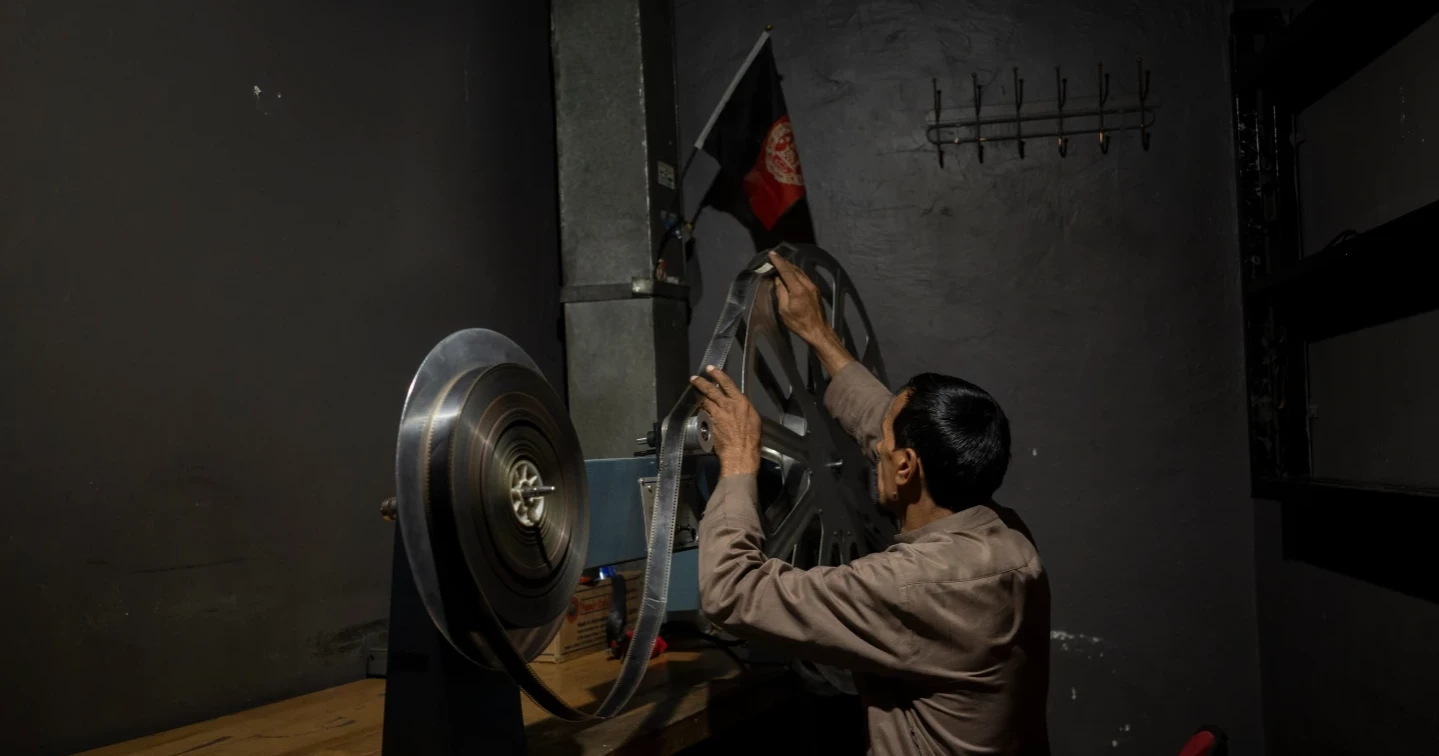
Afghanistan’s historic Ariana Cinema, a cultural landmark that survived decades of war and political upheaval, has been demolished to make way for a new shopping center in downtown Kabul.
Demolition work began on Dec 16, and within a week the cinema, which opened in the early 1960s, was completely torn down. The decision has sparked sadness and anger among Afghan artists and film lovers, who see the loss as another blow to the country’s cultural heritage.
Afghan film director and actor Amir Shah Talash said the destruction went beyond bricks and cement. He said it symbolized the erasure of Afghanistan’s cinematic history and the struggles of artists who continued their work despite years of conflict and insecurity.
The Ariana Cinema was closed after the Taliban returned to power in 2021, when authorities banned most forms of entertainment, including films and music. Cinemas across the country were ordered to shut, and the Afghan Film Administration was dissolved earlier this year.
Kabul Municipality later decided to clear the site to build a commercial complex. A municipal spokesman said the area had strong commercial potential and that developing the land would help generate income and improve the city.
Opened in 1963, the Ariana reflected a period of modernization under Afghanistan’s former monarchy. It later suffered heavy damage during decades of conflict and was closed under the first Taliban rule in the 1990s.
After the Taliban were ousted in 2001, the cinema was rebuilt with French support and reopened in 2004. It became a popular venue for Indian films, Hollywood action movies and locally produced Afghan films during a brief revival of the country’s film industry.
For many Afghans and visitors, the Ariana was more than a movie theater. It was a gathering place where people sought relief from daily hardships. Film lovers from neighboring Pakistan also traveled to Kabul to watch Indian movies during periods when such films were restricted at home.
Artists say the loss of the Ariana Cinema reflects a wider decline in cultural space under current restrictions. Still, Talash said art cannot be erased completely, adding that while buildings may fall, creativity survives in people’s minds and memories.