
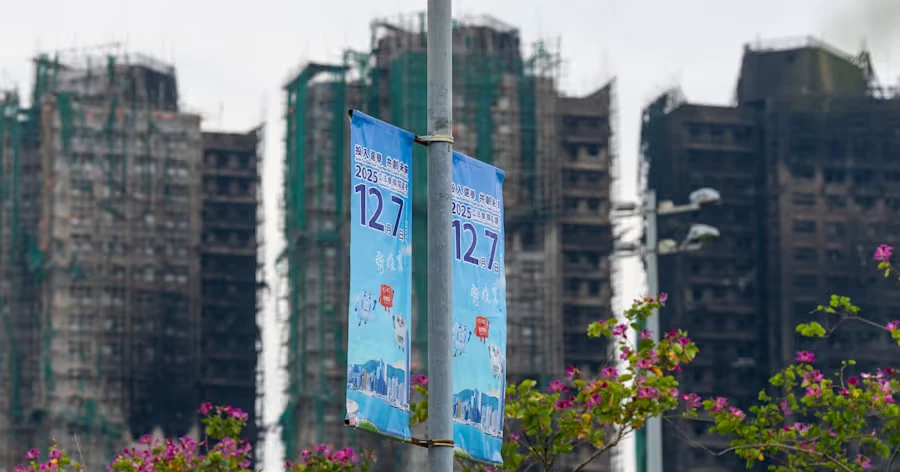
Hong Kong will hold a legislative election on Sunday as the city grapples with public frustration and questions over governance after a devastating apartment fire killed at least 159 people, the deadliest since 1948. The tragedy has intensified scrutiny of Beijing’s “patriots-only” political system and could weigh heavily on voter turnout, a key indicator of public sentiment in an era of shrinking political participation.
The vote comes just 11 days after the massive blaze engulfed seven towers of a high-rise complex, prompting concerns about oversight of building maintenance and the authorities’ investigation. While widespread protests are unlikely due to the extensive security crackdown that began five years ago, residents have voiced worries privately, on social media and to reporters.
This year’s race features significant changes within the 90-member Legislative Council. Nearly 40 percent of incumbents, including well-known and mildly outspoken figures, have chosen not to run. They are being replaced by a larger number of candidates with business links to mainland China and more individuals who serve in China’s legislature and political advisory bodies, reflecting Beijing’s tightening control over the city’s political landscape.
Veteran lawmakers began announcing their departures in late September. Some, like Regina Ip, said they wanted to make way for younger politicians. Others denied facing pressure but their exits drew more attention to a legislature now fully aligned with Beijing after electoral rules were overhauled in 2021. Those changes reduced the number of directly elected seats from 35 to 20, expanded the role of a pro-Beijing election committee and introduced strict vetting of all candidates by national security authorities. Pro-democracy lawmakers have disappeared from the chamber after many were arrested under the 2020 national security law.
Public concern about the performance of the legislature has grown. A local think tank earlier this year reported unease over the quality of debate and accountability. Meanwhile, an Associated Press review found that at least 26 of 161 candidates work in Chinese-funded enterprises, almost double the number identified in 2021. Sixteen candidates are delegates to China’s top legislature and 13 sit on its political advisory body. Analysts say the trend suggests Beijing favors younger, more compliant lawmakers and is reducing reliance on traditional political parties.
Among the newcomers is Olympic fencing champion Vivian Kong, who passed official vetting after defending her eligibility to run in the tourism sector. Other candidates with ties to Chinese-funded companies defended their dual roles, saying their familiarity with national policies could help Hong Kong integrate with mainland development plans.
Hong Kong leader John Lee rejected suggestions of interference and criticized what he called attempts to smear the election. He said personnel shifts are normal and that Beijing has a legitimate interest in the city’s political development.
Turnout remains one of the biggest questions. Participation fell to a record low of 30.2 percent in 2021. The government has expanded polling locations, extended voting hours and encouraged employers to allow staff time to vote. Authorities have also made several arrests over social media posts allegedly discouraging voting or damaging election materials. But analysts say the fire has disrupted efforts to boost turnout and could depress participation further, with both pro-democracy supporters and some pro-government voters expected to stay home.
John Burns, a University of Hong Kong scholar, said the disaster has “made it very difficult for the authorities to better the thirty percent,” adding that turnout will likely fall even lower.