
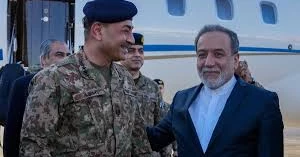
Iran’s foreign minister said Friday that deep mistrust between Tehran and Washington remains the main barrier to ending the conflict with the United States, while also signaling openness to diplomatic mediation from countries such as China.
Speaking in New Delhi, Foreign Minister Abbas Araghchi said mixed signals from the U.S. have raised doubts about Washington’s true intentions. He stated that Iran questions America’s seriousness in negotiations and would only move forward if the U.S. pursued a fair and balanced agreement.
His remarks came after U.S. President Donald Trump rejected Iran’s latest proposal, calling it “garbage.” Although Tehran reportedly offered some nuclear-related concessions, Trump has insisted that Iran must give up its highly enriched uranium and be prevented from developing nuclear weapons. Iran continues to maintain that its nuclear activities are intended for peaceful purposes.
Meanwhile, discussions between Iran and the U.S. remain stalled despite a fragile ceasefire, increasing fears that tensions in the Middle East could escalate again and worsen the global energy crisis triggered by the conflict.
Iran continues to exert influence over the Strait of Hormuz, a crucial global oil shipping route, while U.S. forces maintain a blockade on Iranian ports. Trump and Chinese President Xi Jinping reportedly agreed during recent talks that the strait should be reopened.
Araghchi welcomed possible diplomatic assistance from China, pointing to Beijing’s earlier success in helping restore relations between Iran and Saudi Arabia. However, China has not publicly shown strong interest in becoming more involved, despite Trump claiming that Xi had offered support in resolving the crisis.
Pakistan also said it was continuing diplomatic efforts to reduce regional tensions, though officials declined to reveal details of those discussions.
One of the key sticking points in negotiations remains Iran’s stockpile of enriched uranium. Trump and Israeli Prime Minister Benjamin Netanyahu have both demanded that the material be removed from Iran. Araghchi acknowledged that the issue remains highly sensitive. He noted that Russia’s earlier proposal to take custody of Iran’s uranium stockpile is not currently under active consideration but could be revisited later.
At the same time, Israel and Lebanon agreed to extend their ceasefire with Hezbollah by another 45 days to allow more time for broader peace negotiations. Despite the extension, clashes continued along the border, with Israeli strikes and Hezbollah attacks causing casualties and damage in southern Lebanon.
Elsewhere, a Chinese security company reported that one of its vessels had been taken into Iranian waters for inspection, following reports of a ship seizure near the United Arab Emirates. Iranian officials recently reiterated their authority over the Strait of Hormuz and defended the right to seize vessels connected to the U.S.
Amid growing concerns over disruptions in oil transport, the United Arab Emirates announced plans to speed up construction of a new oil pipeline designed to bypass the Strait of Hormuz. The project is expected to significantly increase the country’s export capacity once completed next year.