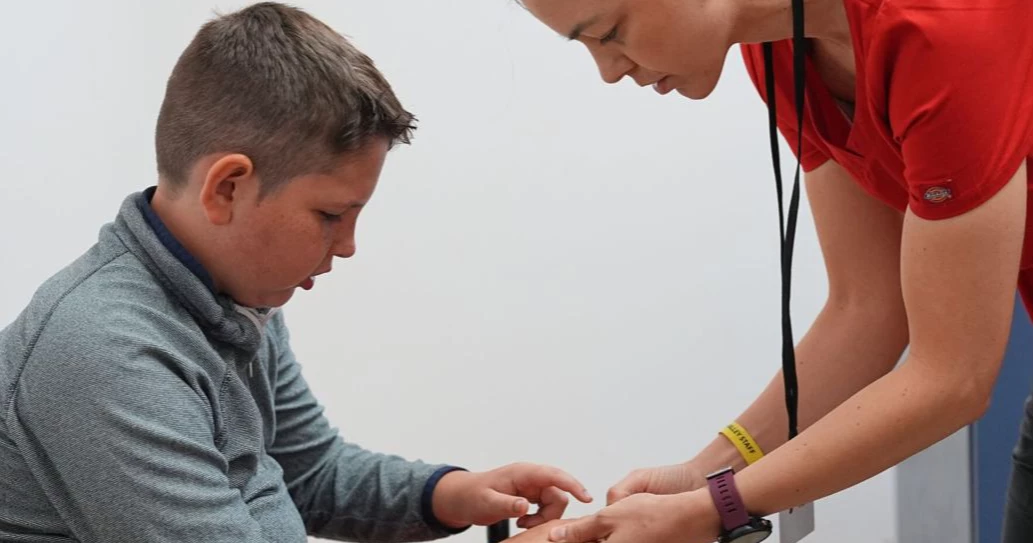
A 12-year-old diagnosed with lupus found himself soaring through the air on a high-ropes course at a New York sleepaway camp — something his family once thought he could never safely experience.
Dylan Aristy Mota took part in the camp after doctors assured his mother that medical staff would be present throughout the program. The setup gave him a rare chance to enjoy a normal childhood experience without fear.
“It’s really fun,” Dylan said. He added that knowing doctors were nearby gave him peace of mind: “If anything else pops up, they can catch it faster than if we had to wait til we got home.”
Autoimmune diseases such as lupus, myositis and certain forms of arthritis — in which the immune system attacks the body instead of protecting it — are typically associated with adults. But specialists say children can develop them too, though cases are less common than Type 1 diabetes.
“People often ask, ‘Can kids have arthritis? Can kids have lupus?’” said Dr Natalia Vasquez-Canizares, a pediatric rheumatologist at Children’s Hospital at Montefiore, which partnered with Frost Valley YMCA to help young patients attend a traditional summer camp despite strict medication schedules and parents’ anxieties. “Imagine for an adult, it’s difficult. If you have that disease since you’re young, it’s very difficult to, you know, cope with,” she said.
The illnesses can be especially severe when they strike before puberty, and strong genetic factors are often involved. While environmental stresses like infections can trigger autoimmune disorders at any age, genes play a larger role when the disease begins early in life, said Dr Laura Lewandowski of the National Institutes of Health.
In children, symptoms can be subtle. Some may limp or return to crawling rather than complain about joint pain, Vasquez-Canizares said.
Dylan said he had looked “normal” before his symptoms appeared. Then, “my face turned like the bright pink, and it started to like get more and more red,” he said. His family initially thought it was allergies, and he went through multiple appointments before being diagnosed with lupus in January.
Treatment is complicated for young patients. Drugs that control inflammation weaken developing immune systems that are still learning to fight infections. Some medicines can also affect bone growth.
Researchers are working on better options. Seattle Children’s Hospital recently launched the first clinical trial of CAR-T therapy for pediatric lupus. The treatment reprograms a patient’s own immune cells to destroy harmful B cells. Trials in adults with lupus and other autoimmune diseases have shown early signs of long-term, drug-free remission.
Another promising area of study involves preventing a rare but serious fetal heart defect caused by specific antibodies found in lupus, Sjögren’s and other autoimmune diseases. Dr Jill Buyon at NYU Langone Health is testing whether a drug used for another condition can protect babies at risk.
The antibody can cross the placenta at a critical stage of heart development and disrupt normal rhythm. Some existing treatments reduce the risk but cannot fully prevent it. Buyon’s team recently reported the healthy birth of a girl to a mother with mild lupus.
“This is a rare example where we know the exact point in time at which this is going to happen,” said Dr Philip Carlucci, an NYU rheumatology fellow and study co-author.
Kelsey Kim, who previously lost a baby to the condition and had another child who needed a pacemaker, chose the experimental treatment during her latest pregnancy. Her third daughter was born healthy in June after she made weekly trips from northern Virginia to NYU for about three months. Buyon’s team plans a clinical trial to expand access to other high-risk mothers.
At the New York camp, the main goal for doctors was to help children feel like kids again after months or years of strict medication routines.
“I do kind of get to forget about it,” said 11-year-old Ethan Blanchfield-Killeen, who lives with juvenile idiopathic arthritis, a childhood version of rheumatoid arthritis that causes stiff and painful joints.
During camp, a doctor checked his hands one day. On another, he ran across the grass covered in paint during a spirited game of paint tag.
“Just seeing them in a different perspective almost brings tears to my eyes,” said Vasquez-Canizares.