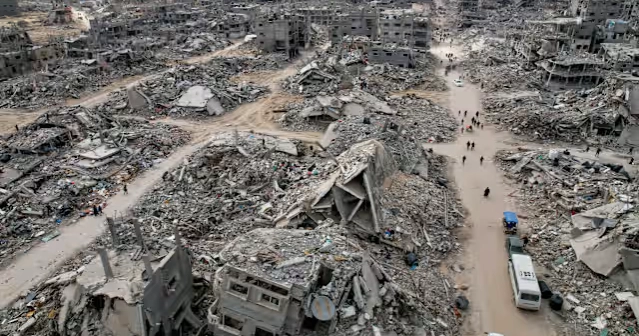
An increasing number of legal and human rights experts, including those commissioned by a U.N. body, say Israel’s military campaign in Gaza amounts to genocide — a charge Israel strongly denies but which has intensified its diplomatic isolation and strained relations even with close allies.
The accusation, which Israel calls baseless and antisemitic, comes as global outrage mounts over the humanitarian disaster in Gaza, now in its 23rd month. Tens of thousands of Palestinians have been killed, and widespread famine has taken hold, while a new offensive in Gaza City has drawn condemnation from several European allies.
Israel argues its military actions are lawful and target Hamas, whose Oct. 7, 2023, attack killed around 1,200 people and took 251 hostages. About 48 hostages remain in Gaza, with Israel believing roughly 20 are still alive. Israeli leaders say Hamas’ assault itself was genocidal.
However, Gaza’s Health Ministry says more than 65,000 Palestinians have been killed since the war began. The ministry — part of the Hamas-run administration — says women and children make up about half the dead.
What defines genocide
The 1948 U.N. Genocide Convention defines genocide as acts committed “with intent to destroy, in whole or in part, a national, ethnical, racial or religious group,” including killing, causing serious harm, or inflicting conditions aimed at its physical destruction.
Experts and rights groups invoke the term
Last week, a team of independent experts appointed by the U.N. Human Rights Council concluded that Israel’s conduct in Gaza constitutes genocide, citing patterns such as the “total siege” on the enclave, large-scale killings, and the destruction of vital infrastructure. Israel says Hamas uses civilian sites like hospitals and schools for military purposes and partially eased its blockade in May.
Dozens of genocide scholars now share that view, including Omer Bartov, a Holocaust and genocide studies professor at Brown University who once defended Israel’s actions but later changed his stance after the takeover of Rafah, calling the operation “genocidal.”
UN inquiry accuses Israel of genocide in Gaza, urges international action
The use of the term has spread beyond academia. Spanish Prime Minister Pedro Sánchez recently called Israel’s actions “the extermination of a defenseless people.” Amnesty International and Human Rights Watch have also used the label, citing deliberate deprivation of food, water, and aid as evidence of genocidal intent.
Even two Israeli human rights groups have used the term, though such views remain rare within Israel.
Critics reject the accusation
Israel and its allies reject the genocide label, saying such claims distort the country’s actions and motives. The Israeli Foreign Ministry dismissed the U.N.-commissioned report as “distorted and false.”
Prime Minister Benjamin Netanyahu argued that if Israel had intended genocide, “it could have done it in one afternoon,” implying restraint. Scholars note that genocide is defined by intent, not numbers.
U.S. President Donald Trump said he had seen no evidence of genocide, and the Elie Wiesel Foundation for Humanity called Israel’s campaign “legitimate self-defense.” Holocaust scholar Norman Goda said the accusation was part of efforts “to delegitimize Israel,” describing it as “laced with antisemitic tropes.”
U.N. Secretary-General António Guterres and others have emphasized that it is up to international courts — not governments or academics — to determine whether genocide has occurred.
The case at the top U.N. court
South Africa filed a case against Israel at the International Court of Justice (ICJ) in late 2023, accusing it of genocide. About a dozen countries have joined the proceedings, though a final ruling could take years.
Strikes across Gaza kill at least 31 as scholars accuse Israel of genocide
To prove genocide, South Africa must establish Israel’s intent. Its lawyers have cited remarks from Israeli officials, including then-Defense Minister Yoav Gallant calling Gazans “human animals,” and Deputy Knesset Speaker Nissim Vaturi’s comment about “erasing the Gaza Strip.” Israeli leaders say those remarks were taken out of context and referred to Hamas, not civilians.
Even if the ICJ finds Israel guilty, it cannot enforce punishment or halt military operations. Only the U.N. Security Council can take such steps, but the U.S. has repeatedly vetoed resolutions critical of Israel.
Meanwhile, the International Criminal Court has issued arrest warrants for Netanyahu and Gallant — not for genocide, but for allegedly using starvation as a weapon of war, charges they reject.
Mounting diplomatic and cultural backlash
Pressure on Israel continues to grow internationally. European protests have intensified, and calls for boycotts have expanded to cultural and sports arenas. European Commission President Ursula von der Leyen has urged partial suspension of trade ties, while Germany and the U.K. have limited or paused some arms exports.
Even those who dispute the genocide claim say the term’s power is immense.
“‘Genocide’ isn’t just a legal category — it’s a moral and political judgment that lasts forever,” said Goda. “A nation accused of genocide can never fully escape that shadow.”
Source: AP