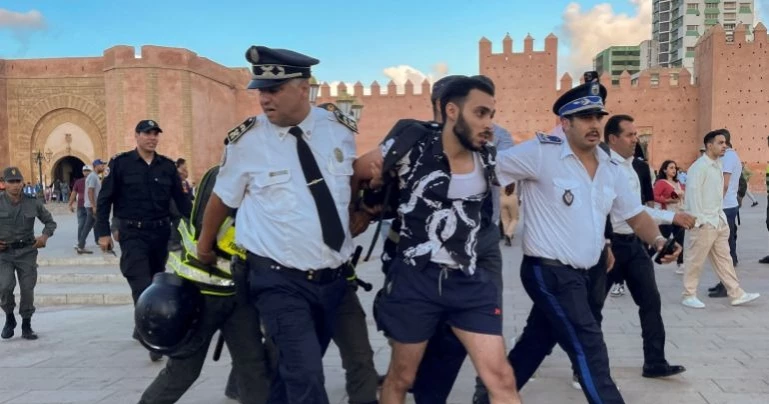
Moroccan authorities have detained more than 400 people after days of violent youth-led protests demanding reforms in the health and education sectors, the Interior Ministry said Thursday.
The unrest, now in its fifth night, has spread across several cities, with the fourth night of demonstrations marked by heightened violence. Authorities reported that 263 security personnel and 23 civilians were injured as protesters torched vehicles, looted shops and ransacked businesses.
According to the ministry, 409 people were taken into custody after clashes on Tuesday night. Young men armed with knives hurled stones and Molotov cocktails, while administrative buildings, banks and shops were attacked in cities including Ait Amira, Inezgane, Agadir, Tiznit and Oujda. Officials said 142 security force vehicles and 20 private cars were set ablaze.
Videos verified by Al Jazeera showed damaged ATMs and a looted bank with shattered glass littering the ground.
The demonstrations have been driven by an anonymous online youth collective calling itself GenZ 212, which has used TikTok, Instagram and Discord to mobilize supporters. The group says it rejects violence and insists its dispute is with the government, not the security forces.
Protesters have highlighted government spending on preparations for the 2030 World Cup while schools and hospitals face chronic underfunding. Demonstrators were heard chanting: “Stadiums are here, but where are the hospitals?”
The Interior Ministry said it would uphold the right to protest under legal frameworks but vowed to respond with “restraint and self-control, avoiding provocation.”
The protests come as Morocco prepares to host the Africa Cup of Nations later this year and ahead of parliamentary elections in 2026. Analysts say the unrest reflects mounting frustration among youth over inequality, corruption, poor public services and lack of opportunities despite Morocco’s headline economic growth.
The latest wave of demonstrations has been described as the most violent since protests in 2016–2017 in the Rif region, when clashes with security forces left a lasting mark on Morocco’s political landscape.
Source: Agency