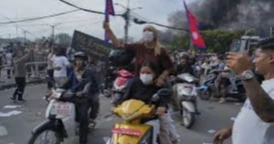
Nepal's Prime Minister Khadga Prasad Oli resigned on Tuesday following a wave of violent protests sparked by a recent ban on social media platforms. The demonstrations, which escalated into broader outrage over government corruption and elitism, resulted in the deaths of 19 people after police opened fire on protesters in the capital.
The unrest began when the government blocked access to platforms like Facebook, X (formerly Twitter), and YouTube, citing the companies’ failure to register with authorities. Although the ban was lifted on Tuesday, the protests continued, turning into a wider movement led by the country's youth — dubbed the "Gen Z protest."
Anger over the social media restrictions quickly merged with growing frustration over alleged corruption among Nepal’s political elite. Demonstrators set fire to the homes of senior officials — including Oli’s private residence — and even targeted the parliament building. The international airport in Kathmandu was temporarily closed, and some government officials had to be airlifted to safety by military helicopters.
The protesters, many of them young people struggling with high unemployment and lack of opportunity, were particularly incensed by the perceived privilege of the political class and their families — commonly referred to as “Nepo Kids.” According to the World Bank, youth unemployment reached 20% last year, and over 2,000 young Nepalis reportedly leave the country daily in search of work abroad.
“I’m protesting because of the deep corruption in our country,” said student Bishnu Thapa Chetri. “There’s no future for us here.”
Targeting Political Leaders
Protesters stormed and torched the residences of top political figures from various parties, including the president, home minister, and leaders of both the ruling Nepali Congress and the opposition Communist Party of Nepal (Maoist). Oli’s family, however, was at the official residence during the attack.
Authorities imposed a curfew and closed schools in Kathmandu, but demonstrations continued. Protesters demanded justice for those killed and called for the resignation of Prime Minister Oli, chanting slogans like “Punish the murderers in government” and “Stop killing children.”
“We won’t stop until this corrupt regime is gone,” said protester Narayan Acharya, speaking outside the damaged parliament complex.
Police Violence and Rising Death Toll
Monday’s protests drew tens of thousands to Kathmandu’s streets, where demonstrators surrounded Parliament before police began firing live rounds into the crowd. Protesters chanted, “Stop the social media ban. Fight corruption, not free speech,” while waving national flags.
Seven of the 19 who were killed were taken to the National Trauma Center, with many others in critical condition from gunshot wounds to the head and chest, according to hospital staff. Families gathered outside the facility waiting for updates, while many citizens volunteered to donate blood.
Before stepping down, Oli announced the formation of an investigative panel to review the police shootings, with a report expected in 15 days. He also promised compensation for the victims’ families and free medical care for the injured.
Social Media Crackdown Seen as Censorship
The crisis unfolded alongside the government’s push to tighten control over social media through proposed legislation aimed at making platforms more accountable. Critics, however, view the bill as a move to suppress dissent and limit freedom of speech.
The legislation would require social media companies to establish a local presence in Nepal. Human rights groups have condemned it as an infringement on civil liberties.
While some platforms like TikTok and Viber have complied with government rules, major companies like Meta (owner of Facebook and Instagram), Google (YouTube), and X have not responded to the government's requests.
TikTok was previously banned in 2023 for allegedly disrupting social harmony but was reinstated after agreeing to follow Nepali laws, including a pre-existing ban on pornographic content.