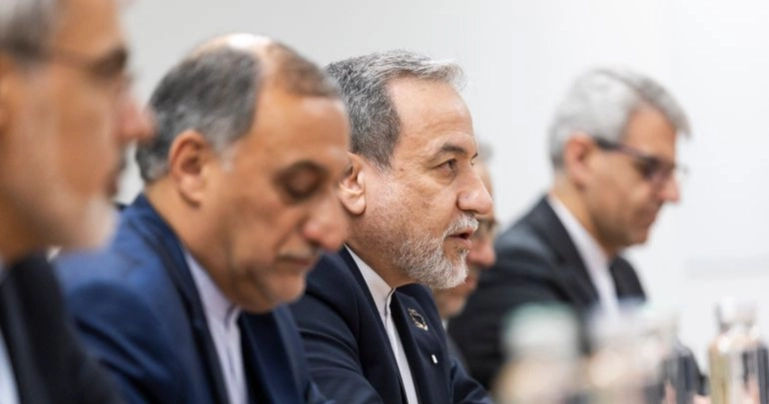
Oman has confirmed that the next round of talks between the United States and Iran will be held in Geneva on Thursday, as tensions remain high amid a growing US military build-up in the region.
Oman’s Foreign Minister Badr Albusaidi said in a social media post that the negotiations were set for Geneva, expressing hope for a “positive push to go the extra mile” towards finalising a deal.
The announcement came hours after Iran’s Foreign Minister Abbas Araghchi said Tehran was ready to establish a full monitoring mechanism to guarantee the peaceful nature of its nuclear programme and ease international concerns.
Speaking to CBS News, Araghchi said Iran was currently negotiating “only nuclear” issues and remained confident that an agreement could be reached. He stressed that uranium enrichment was a matter of national dignity, saying Iran had developed the technology independently and at great cost.
Araghchi said Iran would not abandon its nuclear programme as long as it remains peaceful and under safeguards of the International Atomic Energy Agency. As a signatory to the Non-Proliferation Treaty, he said Tehran was fully prepared to cooperate with international inspectors while insisting on its right to peaceful nuclear energy, including enrichment.
US officials, including President Donald Trump, have previously pushed for Iran to halt enrichment entirely, while Washington has also raised concerns about Iran’s missile programme and regional activities. Araghchi rejected widening the scope of the talks, saying no other issues were under discussion at this stage.
The latest Geneva meeting follows a second round of indirect US-Iran talks held there on February 17, as well as earlier discussions hosted by Oman. Iranian officials said they were preparing a draft proposal aimed at accommodating the concerns of both sides to reach a swift agreement.
Araghchi suggested that any new deal could improve on the 2015 Joint Comprehensive Plan of Action, noting that stronger guarantees on the peaceful nature of Iran’s programme could be paired with wider sanctions relief.
Meanwhile, Iranian President Masoud Pezeshkian said Iran remained committed to peace and stability in the Middle East, while also preparing for all possible scenarios as negotiations continue.
Analysts remain divided over the prospects of a breakthrough, with some warning that sharply differing expectations between Washington and Tehran could still derail a deal despite renewed diplomatic momentum.
With inputs from ALJAZEERA