
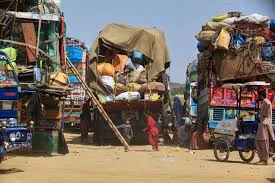
Pakistani authorities have resumed the forced repatriation of Afghan refugees after the federal government declined to extend the stay of nearly 1.4 million Afghans holding Proof of Registration (PoR) cards, officials said on Monday.
The legal status of these PoR card holders expired at the end of June. Many had appealed for a one-year extension to settle matters such as property sales and business closures before returning to Afghanistan.
Alongside PoR card holders, an estimated 800,000 Afghans with Afghan Citizen Cards are also being targeted. Police in provinces including Punjab, Balochistan, and Sindh say these individuals are living in the country without valid documents and are being detained ahead of deportation.
The renewed deportation campaign has drawn criticism from the UN refugee agency (UNHCR), which warned of the risks of mass returns. At least 1.2 million Afghans have already been forced to return from Pakistan and Iran this year, according to a June UNHCR report, raising concerns about potential instability in Afghanistan, which has been under Taliban rule since 2021.
A government notification dated July 31 confirmed that Afghans with expired PoR cards are to be repatriated. The notice emphasized that those without valid passports and Pakistani visas are staying illegally under immigration law.
First group of Syrian refugees returns from Lebanon under new UN-backed plan
Police officials, speaking anonymously, said detentions are being carried out through house-to-house visits and random checks, but not via mass arrests.
“Yes, the Afghan refugees living in Pakistan illegally are being sent back in a dignified way,” said Shakeel Khan, commissioner for Afghan refugees in Khyber Pakhtunkhwa province. He described the operation as the most significant repatriation effort so far under Islamabad’s direction.
Rehmat Ullah, a 35-year-old Afghan resident of Peshawar, said his family had lived in Pakistan for decades and is now preparing to return. “I have five children and my concern is that they will miss their education,” he said. “I was born here, my children were born here, and now we are going back.”
Millions of Afghans have sought refuge in Pakistan over the past four decades due to war, instability, and economic hardship. The current drive follows a 2023 nationwide crackdown on undocumented foreigners.
Pakistan's Deputy PM due Aug 23; bilateral talks with Adviser Hossain Aug 24
The Interior Ministry, which oversees the campaign, has not issued a comment.
UNHCR spokesperson Qaiser Khan Afridi voiced concern, calling the deportations a violation of international obligations. “Sending people back in this manner is tantamount to refoulement,” he said in a statement, urging Pakistan to ensure a “voluntary, gradual, and dignified” return process.
“We call on the government to halt the forcible return,” he added. “Such large-scale and hasty repatriations could endanger Afghan lives and risk broader regional instability.”
Source: Agency