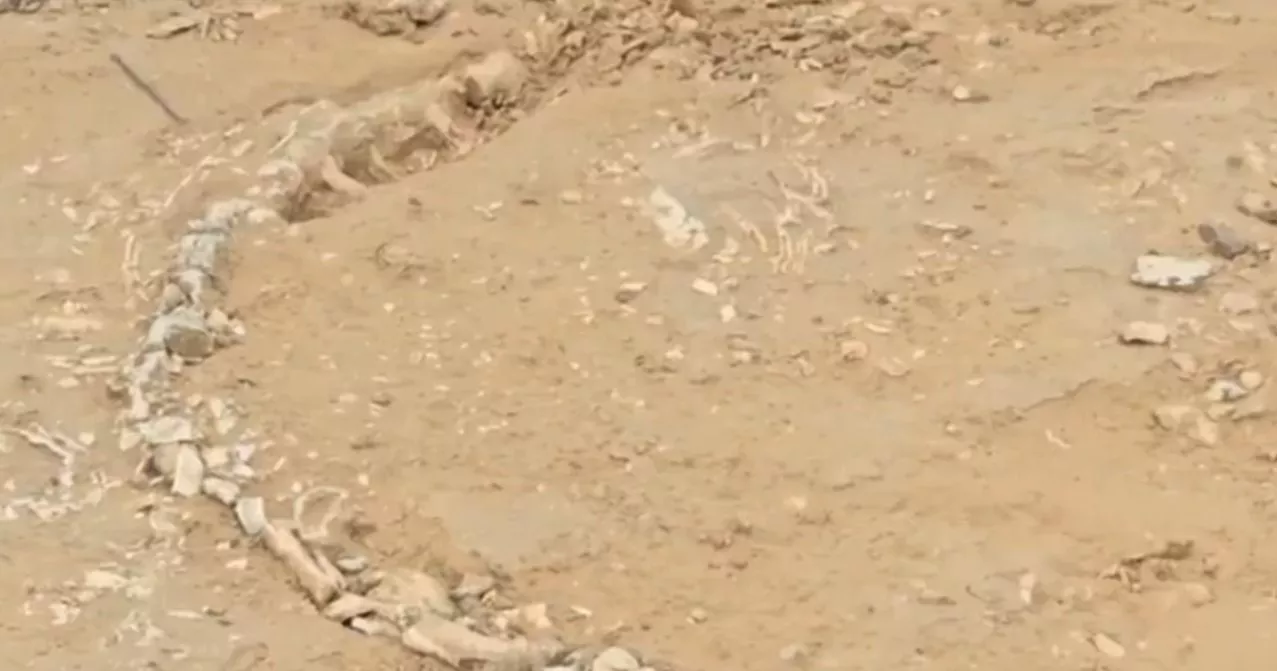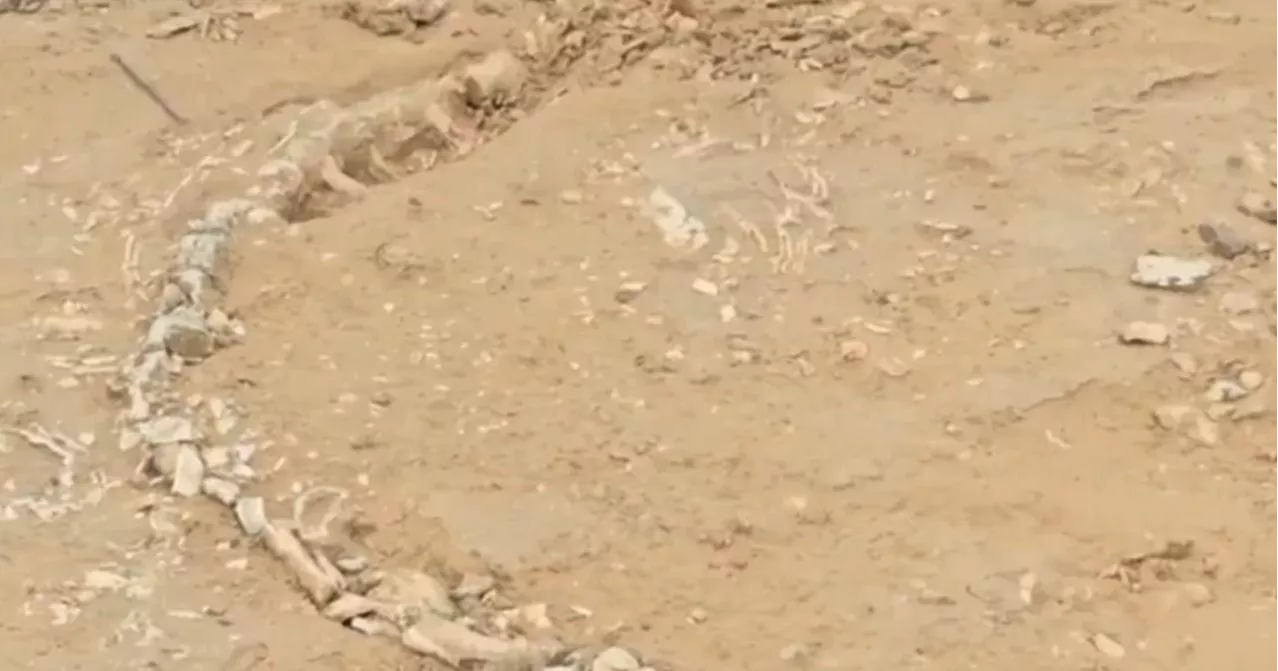
Researchers in India have unearthed the fossilised remains of a rare crocodile-like creature from the Jurassic period in Rajasthan’s Jaisalmer district.
The fossil, identified as a phytosaur, is estimated to be between 1.5 to two metres long and more than 200 million years old, according to experts. It was found in Megha village by senior hydrogeologist Dr Narayandas Inkhiya and his team from the state’s water department.
Dr Inkhiya told the BBC that the site may contain "many more hidden fossils" that could shed new light on evolutionary history. "It also opens up the area as an important spot for fossil tourism," he added.
Geoscientist CP Rajendran explained that the phytosaur was a semi-aquatic reptile, living in rivers as well as on land. "It later evolved into the crocodiles that you find now," he said.
Local villagers first came across the fossil last week while digging a lake. They spotted skeletal-like formations and alerted authorities. Excavations later revealed what appeared to be a fossilised egg, possibly belonging to the reptile.
VS Parihar, a senior palaeontologist leading the study, told NDTV that "the fossil indicates a medium-sized phytosaur that probably lived near a river here millions of years ago and ate fish to survive."
Mr Rajendran noted the discovery is "probably a rare fossil specimen," as only limited phytosaur remains have been identified worldwide.
While remarkable, experts say the find is consistent with the region’s history. Jaisalmer lies in the Lathi geological formation, a Jurassic-era ecosystem where dinosaurs once roamed. Dr Inkhiya himself discovered a fossilised dinosaur egg in Jaisalmer in 2023, while scientists from the Geological Survey of India had unearthed remains of the oldest known herbivorous dinosaur in 2018.