
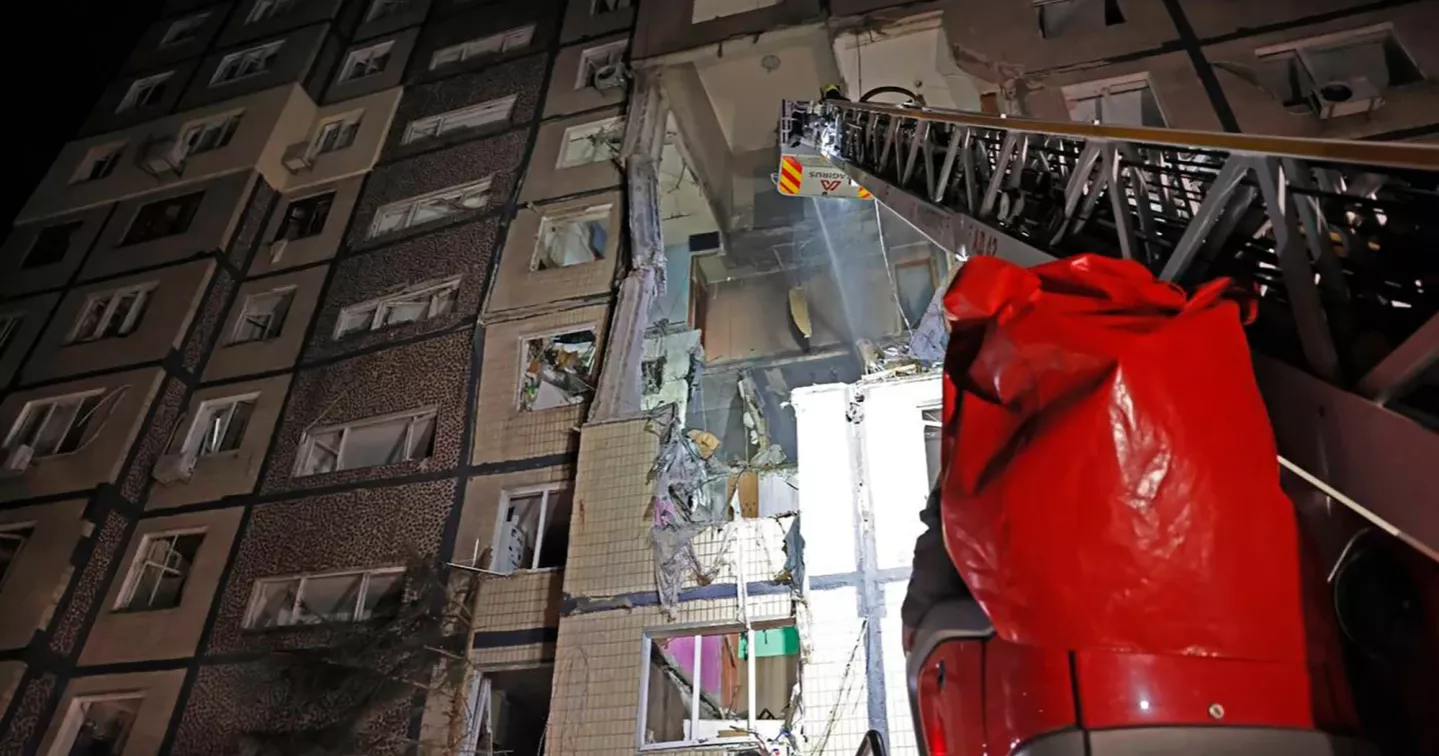
A Russian drone struck a tower block in eastern Ukraine early Saturday, killing three people and injuring 12, Ukrainian authorities reported.
The attack hit a nine-story building in Dnipro, Ukraine’s fourth-largest city, while many residents were asleep. The building caught fire, destroying several apartments, and rescuers recovered the bodies of three victims, including two children among the injured, local emergency services said.
The strike was part of a large-scale Russian missile and drone assault across Ukraine targeting energy infrastructure. Ukrainian forces said Russia launched 458 drones and 45 missiles, including 32 ballistic missiles, while Kyiv’s air defenses intercepted 406 drones and nine missiles. At least 25 locations were hit. Ukrainian Energy Minister Svitlana Grynchuk said power was cut in several regions due to the attacks.
Almost four years after Russia’s full-scale invasion, Kyiv continues to face near-daily strikes, which have killed and injured many civilians. The Kremlin maintains that its attacks target military and energy facilities supporting Ukraine’s war effort. Russia’s Defense Ministry claimed Saturday that its forces shot down 82 Ukrainian drones during the night, including eight over Volgograd. Two people were injured in Saratov after a Ukrainian drone damaged an apartment block, officials said.
Fighting in eastern Ukraine around the strategic city of Pokrovsk has intensified, as both Kyiv and Moscow seek to demonstrate battlefield strength, analysts say. Pokrovsk lies along the eastern front in the “fortress belt” of Donetsk, a heavily fortified line vital for Ukraine’s defense.
Russian President Vladimir Putin has claimed his forces are nearing victory, demanding Ukraine cede the Donbas region—comprising Donetsk and Luhansk—as a precondition for peace. Meanwhile, Ukraine’s long-range drone strikes on Russian refineries aim to reduce Moscow’s oil revenue, while Russian attacks on Ukrainian energy sites seek to deprive civilians of heat, electricity, and water in what Kyiv calls a “weaponized winter” strategy.