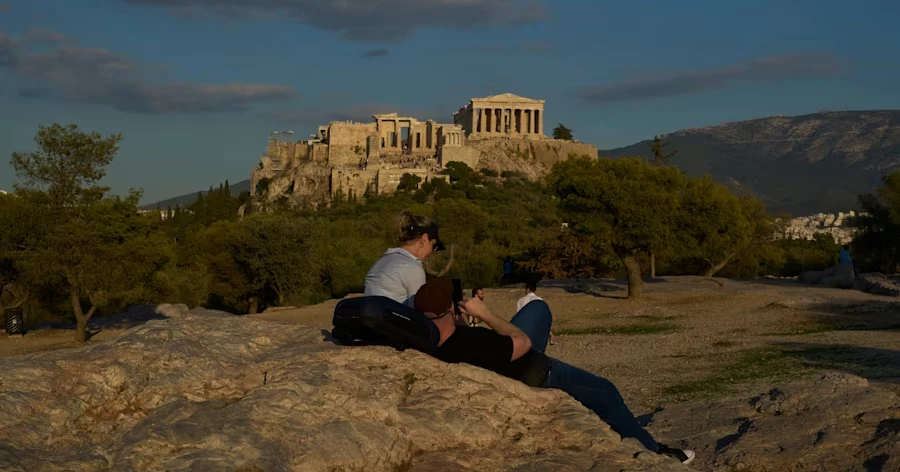
For the first time in decades, visitors walking along the pedestrian street at the foot of Athens’ historic Acropolis Hill can now enjoy a clear, unobstructed view of the Parthenon temple.
The scaffolding that had covered the 5th century B.C. monument’s western façade for conservation work some 20 years ago has finally been taken down, revealing an unencumbered view of the UNESCO World Heritage site.
As the western side offers the best street-level perspective of the Parthenon, the removal—completed in late September—has made a striking difference for visitors. Culture Minister Lina Mendoni said this marks the first time in about two centuries that the monument’s exterior stands completely free of scaffolding.
“For visitors, it feels like they are seeing an entirely different monument,” Mendoni told Skai radio on Friday.
However, the reprieve will be brief, as restoration work will continue. New scaffolding will be installed on the Parthenon’s western side in about a month, but it will be “lighter and aesthetically more in harmony with the monument,” Mendoni added.
The ongoing conservation phase is expected to continue until early summer 2026, after which the Parthenon will once again stand completely free of scaffolding.
The Acropolis remains Greece’s most visited tourist attraction, drawing 4.5 million visitors in 2024, according to the national statistical authority. The marble Parthenon was constructed in the mid-5th century B.C. to honor the city’s patron goddess, Athena.