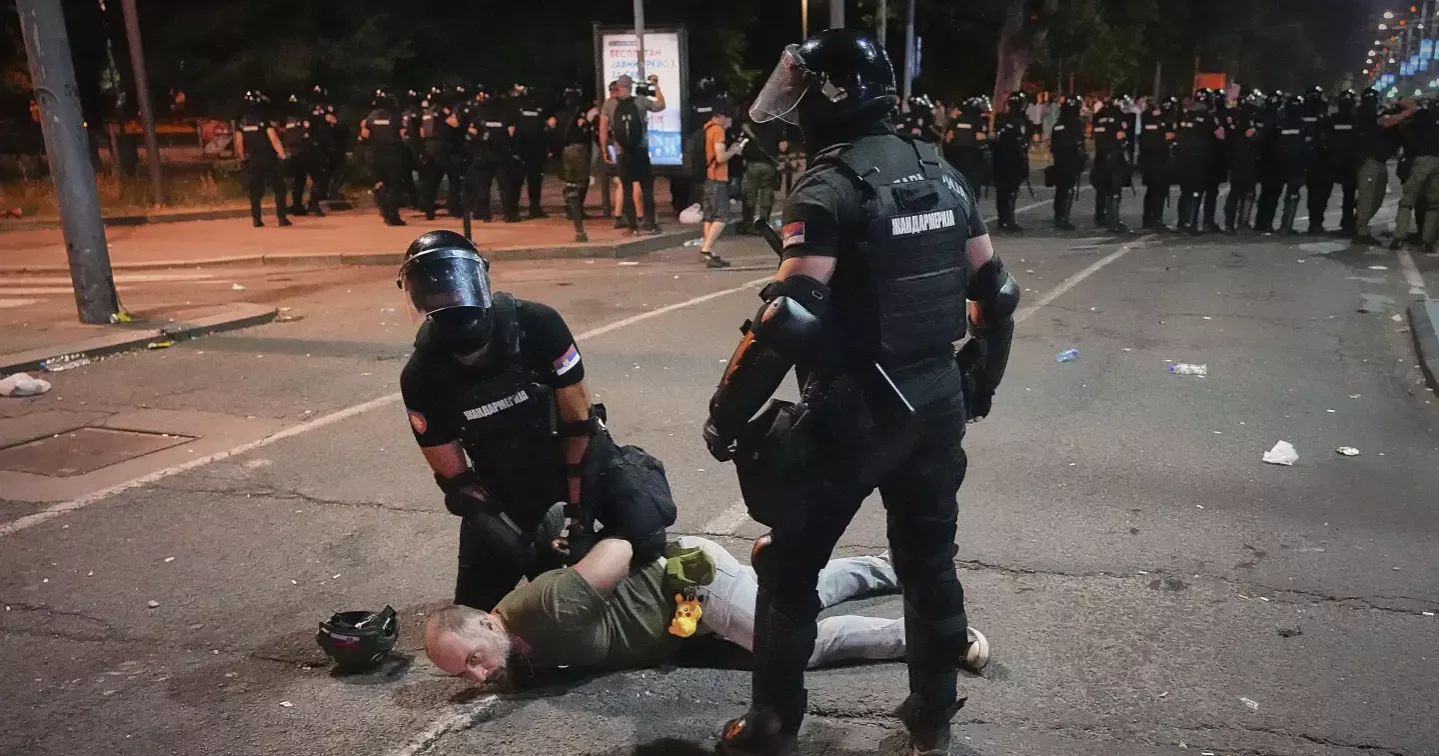
Serbian police have detained 79 university students and other protesters after breaking up street blockades in several cities amid ongoing demonstrations against President Aleksandar Vucic's populist government.
Riot police intervened late Wednesday and into early Thursday in Belgrade, as well as in the northern city of Novi Sad and the southern cities of Nis and Novi Pazar. Authorities rejected accusations of police brutality and the use of excessive force.
However, student organizers claimed that police violently dispersed peaceful protesters, with reports of officers using batons and shields to beat demonstrators. Local media said four students were hospitalized, one of whom suffered a broken collarbone.
The Interior Ministry confirmed that four police officers were injured and a police vehicle was damaged, stating that security forces acted "in accordance with the law" during the operation.
Tensions have been escalating in Serbia following a mass rally last Saturday where tens of thousands of people in Belgrade demanded early parliamentary elections. That protest ended in clashes between riot police and demonstrators.
Despite months of growing public unrest, Vucic has refused to call a snap election. The protests began in November after a deadly incident in Novi Sad where a newly renovated rail station canopy collapsed, killing 16 people and sparking allegations of corruption and negligence in state infrastructure projects.
Serbia is scheduled to hold its next parliamentary and presidential elections in 2027. In the meantime, Vucic has increased efforts to suppress the protests, labeling them as "terror" and accusing demonstrators of trying to destabilize the state.
Opposition groups and human rights advocates accuse Vucic of becoming increasingly authoritarian over his decade-long rule, eroding democratic institutions while allowing corruption and organized crime to thrive—claims he denies.
Although Serbia is officially seeking European Union membership, Vucic's administration has also maintained close ties with Russia and China.