The death toll from widespread flooding and landslides triggered by heavy rains across Southeast Asia rose on Monday, with one additional fatality reported in Vietnam and five more in Thailand, as tens of thousands remain displaced.
In Vietnam, the confirmed death toll has climbed to 91, with 11 people still missing. A week of relentless rainfall has caused severe flooding and landslides across an 800-kilometre (500-mile) stretch of the central region, from Quang Tri to Lam Dong provinces, including the Central Highlands.
Dak Lak remains the hardest-hit province, recording 63 deaths, most of them due to drowning. Additional fatalities were reported in Khanh Hoa, Lam Dong, Gia Lai, Danang, Hue, and Quang Tri provinces.
With roads washed out in multiple areas, authorities have deployed helicopters to deliver food and relief supplies and to help evacuate stranded residents.
After a break in the rain on the weekend, Pham Thu Huyen was one of many hundreds of residents and visitors who helped clean up debris washed ashore in Nha Trang, a popular tourist destination in Khanh Hoa province, known for its white sand beaches.
“We've never experienced that much rain and such bad flooding,” the 45-year-old said.
Waters have also taken their toll on this year's crops, submerging coffee farms in Dak Lak, Vietnam’s major coffee growing region.
Overall, damage so far is estimated to be around $500 million in this round of floods.
Some of the waters have now receded but Vietnam's weather agency warned that with rains continuing in some places the risks remain, and said a new tropical depression was forming that could bring worse weather again later in the week.
Vietnam is among the world’s most flood-prone countries, with nearly half its population living in high-risk areas. Scientists warn that a warming climate is intensifying storms and rainfall across Southeast Asia, making floods and landslides increasingly destructive and frequent.
The current destruction has hit a region already battered earlier this month by floods from record rainfall and the powerful typhoon Kalmaegi.
The country was also hit by typhoons in September and October, and the International Organization for Migration announced Monday that South Korea would contribute $1 million to help Vietnam assist displaced people, communities and migrants affected by those.
The United Nations agency said that according to preliminary data, Vietnam estimates economic damage of some $1.2 billion from that period, with more than a half million homes damaged and hundreds of thousands of people evacuated and dozens killed.
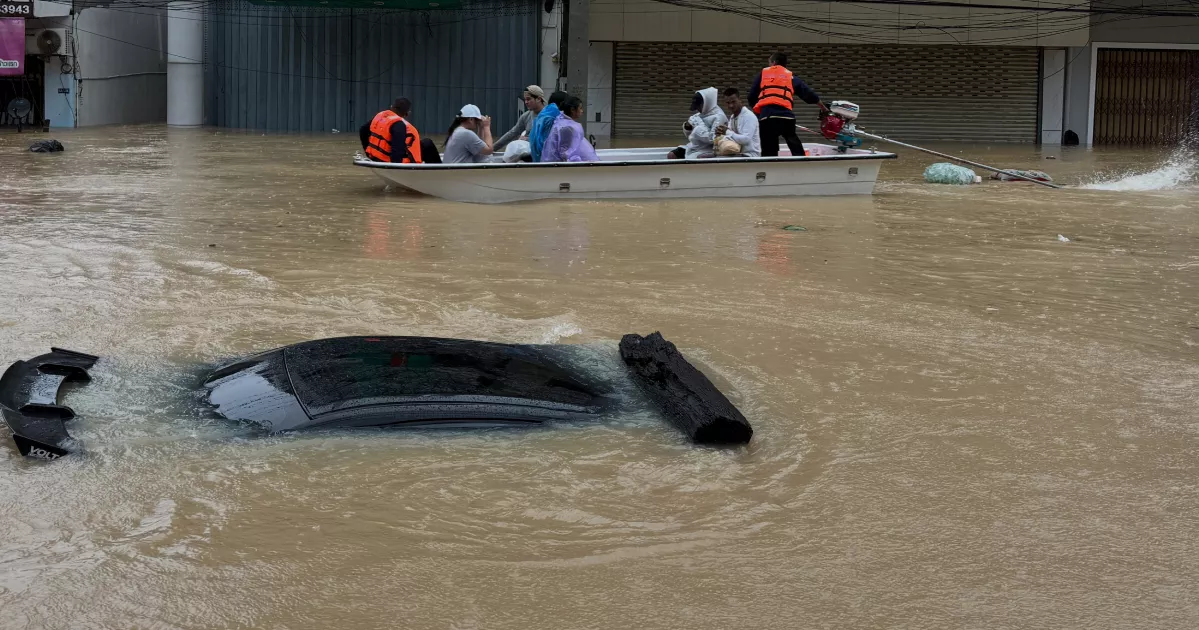
In Thailand, torrential rain in the south of the country caused severe flash flooding over the weekend, affecting nearly 2 million people, officials said. Five were killed and four were injured across six southern provinces, according to regional health officials.
Ten southern provinces have been hit with heavy rainfall over the last week, and officials warned Monday that water levels are expected to rise further with the rain expected to continue through Tuesday.
The city of Hat Yai, a major economic hub in Songkhla province, was hit with 335 millimeters (more than 13 inches) of rain on Friday, the highest 24-hour figure in 300 years, officials said.
From Wednesday through Friday, the city saw 630 millimeters (nearly 25 inches) of rain, complicating evacuation efforts as hundreds of residents and tourists were trapped inside homes and hotels by rising water that forced emergency crews to use lifeboats to transport people along flooded streets.
Thailand was already hit with widespread flooding in the north earlier in the year, followed by months of flooding in the central region, which killed more than two dozen people. That flooding also caused widespread damage to farmers fields and crops, and many thousands of homes.
Malaysia is also grappling with flooding across several states that is expected to worsen as heavy, persistent rainfall continues.
The Social Welfare Department reported Monday that more than 12,500 people across nine states have been evacuated.
The worst-hit area is the northeastern state of Kelantan, which accounts for the majority of those displaced. Authorities have opened 86 temporary shelters and have warned that further rainfall is expected.
Floods are common in parts of Malaysia during the annual monsoon season, which begins in November and can last until March.