
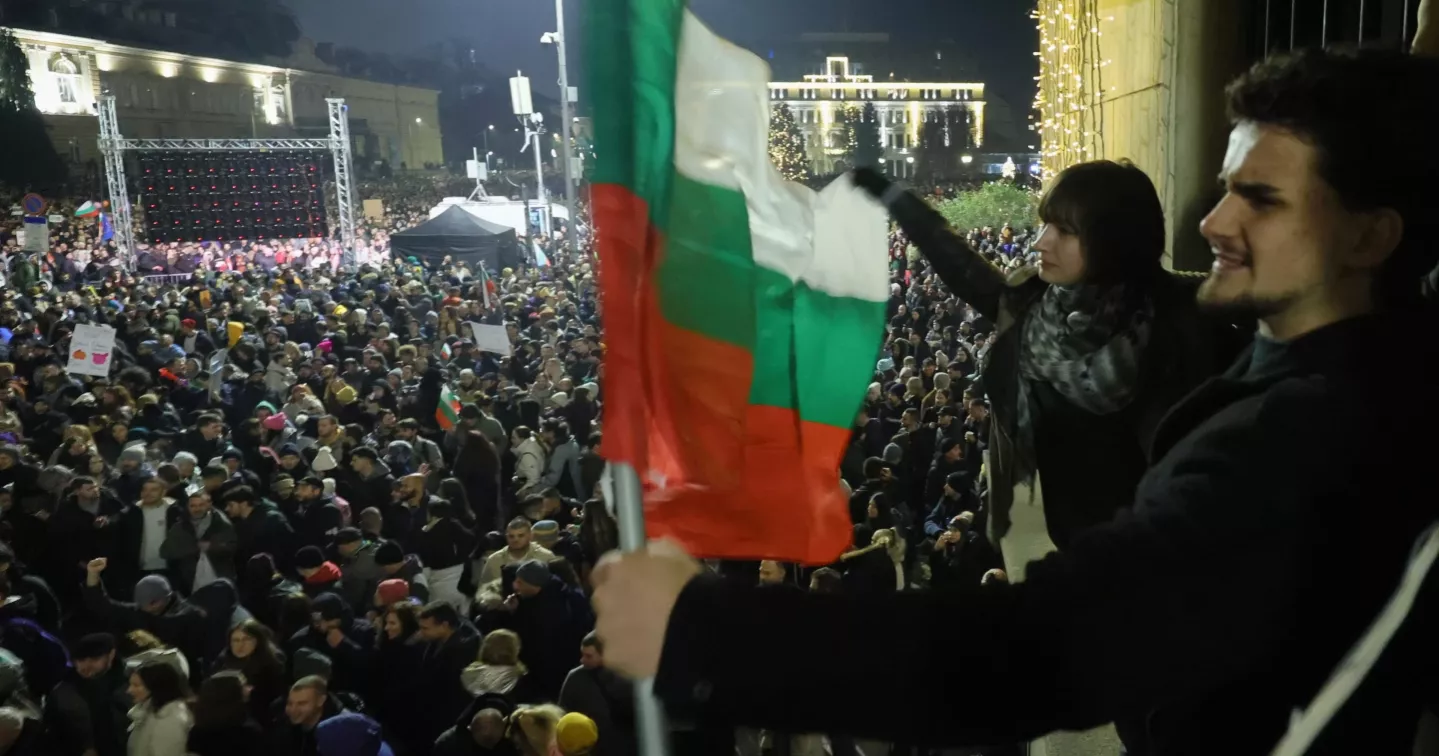
Tens of thousands of Bulgarians took to the streets Wednesday to protest alleged government corruption, just weeks before the country adopts the euro as its official currency.
The demonstrations followed last week’s rallies against the government’s 2026 budget proposals, which included higher taxes, increased social security contributions, and spending hikes. The government later withdrew the plan, but protesters have expanded their demands, calling for Prime Minister Rosen Zhelyazkov’s resignation.
In Sofia, crowds gathered near the parliament, government, and presidential offices, chanting slogans such as “Resignation” and “Mafia.” Student groups from local universities joined the protests, which organizers said exceeded last week’s 50,000-strong rallies. Drone footage suggested over 100,000 participants.
Central to the unrest is Bulgarian politician and oligarch Delyan Peevski, sanctioned by the U.S. and the U.K., whose MRF New Beginning party supports the government. Opponents accuse Peevski of influencing government policies to serve oligarchic interests.
No violence was reported, and the protests concluded peacefully.
Meanwhile, the opposition coalition We Continue the Change – Democratic Bulgaria filed a no-confidence motion against the government, the sixth such attempt, scheduled for Thursday. President Rumen Radev, a government critic, described the protests as a symbolic vote of no confidence and urged lawmakers to respect the public’s demands.
Bulgaria, a nation of 6.4 million, is set to join the eurozone on Jan. 1, becoming the 21st EU country to adopt the euro.