
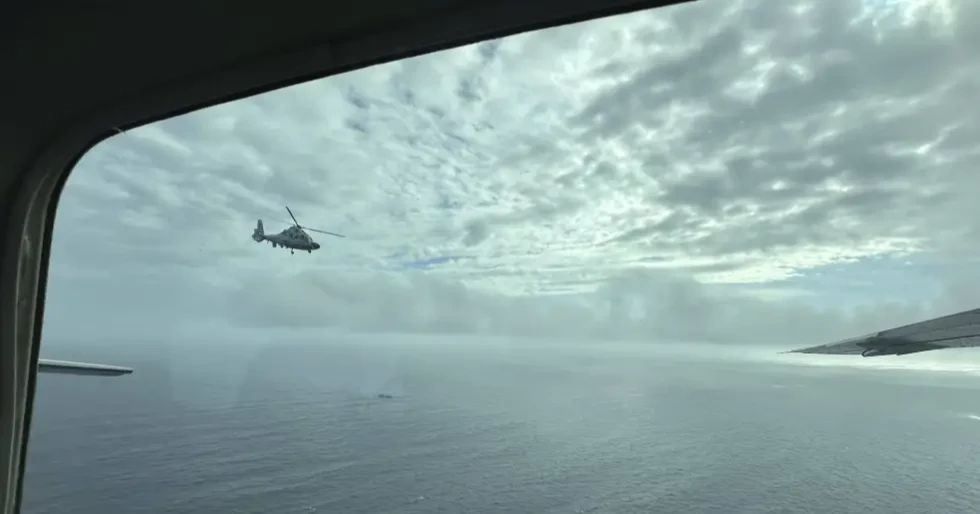
China's coast guard accused a Philippine vessel of intentionally colliding with one of its ships on Tuesday near Scarborough Shoal, a contested area in the South China Sea claimed by both nations. However, the Philippines rejected the accusation, stating that Chinese forces had used high-powered water cannons that caused damage to its ship and injured a crew member.
According to a Chinese coast guard statement, over 10 Philippine government ships approached the waters surrounding the shoal, known as Huangyan Island in China, from multiple directions. The statement said that China responded by using water cannons against the vessels.
This incident occurred just six days after China declared part of Scarborough Shoal as a national nature reserve. The Philippines, which refers to the shoal as Bajo de Masinloc, lodged a formal diplomatic protest.
China and the Philippines have had frequent confrontations in the South China Sea, an area of strategic importance and rich in fishing resources, which China claims nearly in its entirety. Several other countries also lay claim to parts of the sea.
The Philippine coast guard reported that two Chinese coast guard ships used powerful water cannons on a Filipino fishing vessel, the BRP Datu Gumbay Piang, for almost 30 minutes, causing significant damage. This included breaking a window in the captain's cabin and injuring a crew member. The water also caused electrical malfunctions, short-circuiting outlets and affecting five outdoor air-conditioning units.
Additionally, a Chinese navy warship issued a radio warning about "live-fire exercises" at the shoal, which caused distress among Filipino fishermen, according to the Philippine coast guard.
On Tuesday, the Philippine coast guard and fisheries vessels were dispatched to the area to provide fuel, water, ice, and other supplies to over 35 fishing boats.
The Philippines has received support from several friendly nations regarding the nature reserve issue. U.S. Secretary of State Marco Rubio condemned China’s actions, calling them "another coercive move" to assert broad territorial claims in the South China Sea at the expense of neighboring countries. The U.K. and Australia also expressed concern, while the Canadian Embassy in the Philippines opposed using environmental protection as a pretext for asserting control over the disputed Scarborough Shoal.