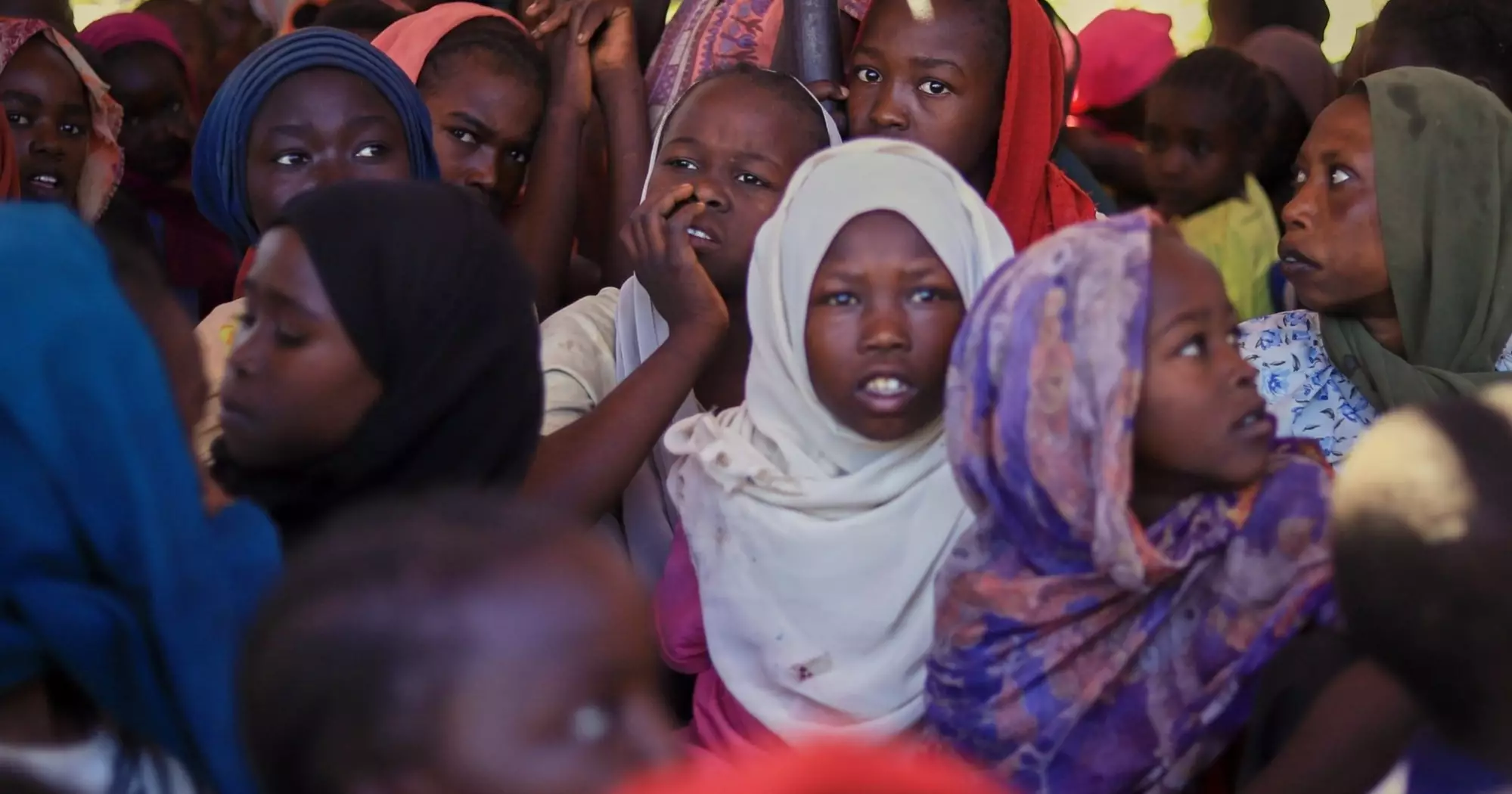
Tens of thousands of Sudanese civilians have fled to overcrowded camps amid reports of atrocities by the Rapid Support Forces (RSF) following their capture of el-Fasher in the western Darfur region, an aid group said Saturday. The U.N. human rights chief warned that many others remain trapped in the city.
Displaced families arriving in Tawila, about 70 kilometers (43 miles) from el-Fasher, find little relief — with few tents and shelters cobbled together from tarps and sheets, according to a video released by Sudan’s IDPs and Refugee Camps group. Children can be seen running through the dusty landscape as adults share meager portions of food.
Since the RSF took control of el-Fasher from the Sudanese army on October 26, more than 16,200 people have fled to camps in Tawila, said Adam Rojal, a spokesperson for the aid organization. The International Organization for Migration estimated that around 82,000 people had escaped the city and nearby villages as of November 4, many traveling on foot to areas already overcrowded with earlier waves of displaced people.
The RSF and the Sudanese military have been locked in a brutal power struggle since April 2023. The war has killed at least 40,000 people, though the true toll is believed to be far higher. Nearly 12 million have been displaced, and almost half of Sudan’s population is now facing severe food insecurity, according to the World Health Organization (WHO).
Last week’s RSF takeover of el-Fasher followed an 18-month siege. The paramilitary group stormed the Saudi Hospital, killing more than 450 people, and carried out house-to-house attacks involving killings and sexual assaults, the WHO reported. The RSF denied targeting civilians or attacking the hospital, but survivor testimonies, satellite images, and videos depict scenes of widespread destruction.
Doctors Without Borders (MSF) said that 300 new arrivals reached Tawila on Thursday alone, describing “extremely high levels of malnutrition” among adults and children. Aid workers warn of dire shortages of food, medicine, and shelter materials. “Many families are surviving on one or two meals a day,” Rojal told the Associated Press.
U.N. Human Rights Chief Volker Türk said civilians remaining in el-Fasher are in grave danger.
“Traumatized civilians are still trapped inside and prevented from leaving,” he said Friday in Geneva. “I fear that the atrocities — executions, rape, and ethnically motivated attacks — are continuing inside the city. Even those who flee face unimaginable cruelty along the escape routes.”
Fighting spreads beyond Darfur
Violence has also intensified across Darfur and into Kordofan, turning both regions into new flashpoints in Sudan’s 19-month conflict. Earlier this week, a drone strike on el-Obeid, capital of North Kordofan, killed at least 40 people and injured dozens.
A Sudanese military official said the army intercepted two Chinese-made drones targeting el-Obeid on Saturday morning. He spoke on condition of anonymity because he was not authorized to speak to the media.
According to Jalale Getachew Birru, a regional analyst with the Armed Conflict Location and Event Data Project, the RSF’s capture of el-Fasher and its advance in Kordofan mark a major strategic gain — but also deepen the humanitarian catastrophe. He estimated that at least 2,000 people were killed across Sudan between October 26 and November 1.
“These developments not only worsen Sudan’s humanitarian crisis,” Birru said, “but also signal the RSF’s growing capacity to push toward central Sudan, potentially undoing the army’s recent gains and reigniting violence in areas that had remained relatively calm.”
On Thursday, the RSF said it had accepted a humanitarian ceasefire proposal put forward by a U.S.-led mediation group known as the Quad. The Sudanese army said it too welcomed the initiative — but only if the RSF withdrew from civilian areas and surrendered its weapons.