
President Donald Trump is set to hold talks with Israeli Prime Minister Benjamin Netanyahu on Monday in Florida, as Washington seeks to inject new momentum into a US-brokered Gaza ceasefire that risks stalling ahead of a complex second phase.
The meeting at Trump’s Mar-a-Lago estate comes as the ceasefire between Israel and Hamas, strongly backed by Trump, has largely held but has recently slowed amid mutual accusations of violations and growing disagreements over the next steps.
Trump is expected to use his close relationship with Netanyahu to push for faster progress, amid criticism that the Israeli leader has not moved decisively enough to advance the process.
The truce’s first phase began in October, days after the second anniversary of the Hamas-led attack on Israel that killed about 1,200 people. Nearly all of the 251 hostages taken during that attack have since been released, either alive or dead.
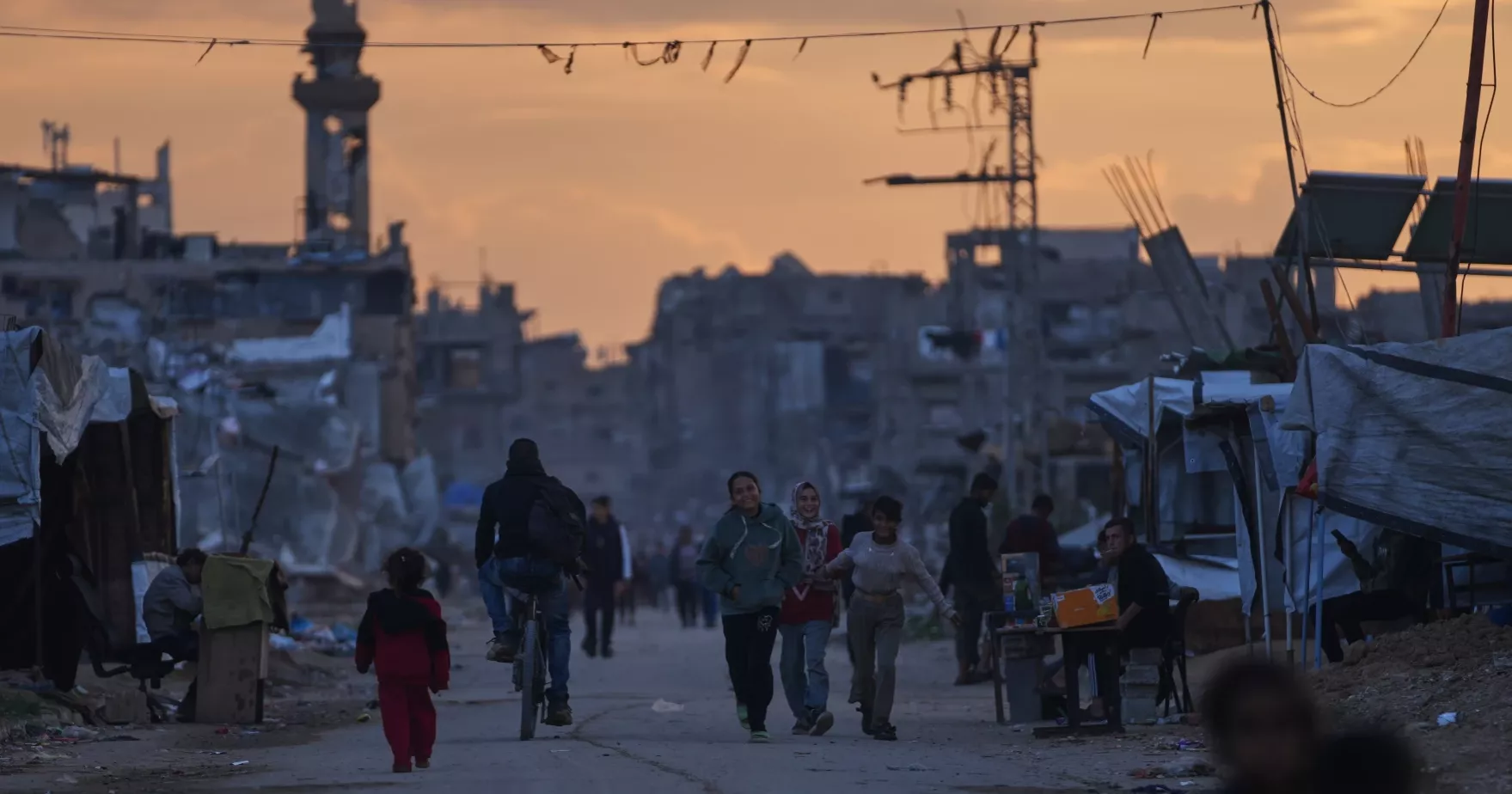
Attention is now turning to the far more challenging second phase, outlined in Trump’s 20-point peace plan that has been approved by the UN Security Council. The plan envisions ending Hamas’ rule in Gaza and includes rebuilding the territory under international supervision.
The two leaders are also expected to discuss other regional issues, including Iran. Trump has continued to insist that Iran’s nuclear capabilities were “completely and fully obliterated” following US strikes in June.
Analysts say significant gaps remain. Mona Yacoubian of the Center for Strategic and International Studies said many elements of the second phase are opposed by Netanyahu, making agreement difficult.
“How he does that, what kind of pressure he puts on Netanyahu, I think, is going to be important to watch for,” she said, adding that the talks could reveal broader differences in their regional approaches.
US mediation efforts have continued in parallel. Recently, US Middle East envoy Steve Witkoff and Trump’s son-in-law Jared Kushner met in Florida with officials from Egypt, Qatar and Turkey, which have been key mediators.
According to officials briefed on those discussions, progress has been hampered by Israeli delays in approving members of a proposed Palestinian technocratic committee to administer Gaza and by continued Israeli military strikes.
A central but unresolved element is the proposed International Stabilization Force, a multinational body meant to oversee security and help disarm Hamas. Disagreements persist over its mandate, with some countries fearing it could effectively become an occupation force.
Hamas has said it is open to discussing “freezing or storing” its weapons but maintains its right to armed resistance as long as Israel occupies Palestinian territory. US officials have floated possible incentives, including financial compensation, in exchange for weapons.
Reconstruction of Gaza remains another major challenge. Arab states, including Egypt, Qatar, Saudi Arabia and Turkey, are pressing for further Israeli withdrawal and a negotiated approach to disarmament before moving ahead with rebuilding efforts.
The meeting between Trump and Netanyahu is being closely watched for signs of whether these obstacles can be overcome, or whether the fragile ceasefire will struggle to move beyond its initial phase.