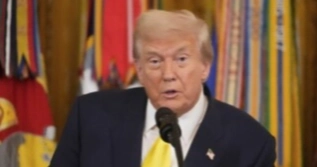
President Donald Trump will host a peace summit at the White House on Friday with the leaders of Armenia and Azerbaijan aimed at ending decades of conflict and reopening vital transportation routes in the South Caucasus region.
The two countries are set to sign an agreement establishing a major transit corridor, named the “Trump Route for International Peace and Prosperity,” which will connect mainland Azerbaijan with its autonomous Nakhchivan region. This connection, demanded by Baku, had previously stalled peace negotiations.
White House spokeswoman Anna Kelly said the roadmap will promote a cooperative future benefiting both nations, the South Caucasus region, and beyond. The transit corridor will ensure seamless connectivity between Armenia and Azerbaijan while respecting Armenia’s sovereignty and territorial integrity.
Armenia’s territory separates Azerbaijan and Nakhchivan by a 32-kilometer (20-mile) stretch.
In addition to the joint agreement, both countries will sign separate deals with the U.S. to enhance cooperation in energy, technology, and economic sectors, the White House added.
Trump previewed the summit in a social media post on Thursday, saying the leaders will participate in a peace ceremony and sign economic agreements aimed at unlocking the South Caucasus region’s full potential.
“Many Leaders have tried to end the War, with no success, until now, thanks to ‘TRUMP,’” Trump said on his Truth Social platform.
The president will first meet with Armenian Prime Minister Nikol Pashinyan, followed by a meeting with Azerbaijan’s President Ilham Aliyev. The three leaders will then take part in a joint signing ceremony in the State Dining Room.
Armenia and Azerbaijan have been in conflict for nearly 40 years over the Karabakh region, internationally known as Nagorno-Karabakh, which was predominantly Armenian-populated during the Soviet era but lies within Azerbaijan’s borders. Multiple violent clashes over the years left tens of thousands dead, despite numerous international mediation efforts.
In 2023, Azerbaijan regained full control of Karabakh and has since engaged in talks to normalize relations with Armenia.
Trump signs tax and spending cut bill at White House
The agreement represents a geopolitical setback for Russia, which had long acted as mediator to extend its influence in the strategically important South Caucasus. Russia’s influence weakened after its full-scale invasion of Ukraine in February 2022.
Russia refrained from intervening when Azerbaijan swiftly reclaimed Karabakh in a September 2023 offensive, angering Armenia. Since then, Armenia has sought to reduce Russian influence and pivot westward, while Azerbaijan, emboldened by its victory, has taken a more defiant stance toward Moscow.