
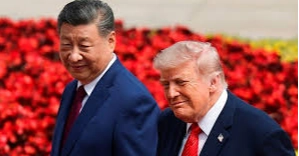
Trump’s visit to China highlighted major discussions on Taiwan, a possible new framework for U.S.-China relations, and his notably flattering tone toward Chinese President Xi Jinping.
During the three-day trip, Trump remained unusually quiet, avoiding extensive media interaction and limiting his social media activity. However, while returning home, he spoke more openly about the issues discussed with Xi.
A key focus of the visit was Taiwan. Xi warned that mishandling the Taiwan issue could lead to serious conflict between the U.S. and China. While Trump avoided publicly commenting on Taiwan during his stay in Beijing, he later hinted that Xi’s strong opposition to Taiwan independence might influence his decision on a planned U.S. weapons sale to Taipei.
Before the trip, concerns had already emerged about Trump’s stance on Taiwan, especially after he appeared less committed to supporting the island in his second term. Although Secretary of State Marco Rubio maintained that U.S. policy had not changed, Trump later revealed he was reconsidering a major arms package for Taiwan after discussions with Xi.
Trump also addressed the possibility of military intervention if China attacked Taiwan but avoided giving a direct answer, staying consistent with the longstanding U.S. policy of “strategic ambiguity.” This policy supports Taiwan’s ability to defend itself without clearly promising U.S. military involvement.
Another major topic was Iran. Trump said he and Xi discussed the ongoing conflict involving Iran and agreed that Iran should not possess nuclear weapons. According to Trump, Xi also expressed support for reopening the Strait of Hormuz and even offered to help seek a resolution to the conflict, though Chinese officials have not publicly confirmed this claim.
China described the visit as the beginning of a new phase in bilateral relations, referring to it as a “constructive China-U.S. relationship of strategic stability.” Chinese officials said the proposed framework would guide cooperation and competition between the two countries for the remainder of Trump’s term.
Trade discussions also played a role during the trip. Trump traveled with several prominent American business leaders and claimed significant deals were in progress, including possible purchases of Boeing aircraft by China. However, no concrete agreements were officially announced before he left Beijing.
Throughout the visit, Trump repeatedly praised Xi, calling him a “great leader” and emphasizing their friendly relationship. Xi, while more reserved, welcomed Trump warmly and used symbolic gestures — such as promising White House rose seeds — to strengthen diplomatic ties.