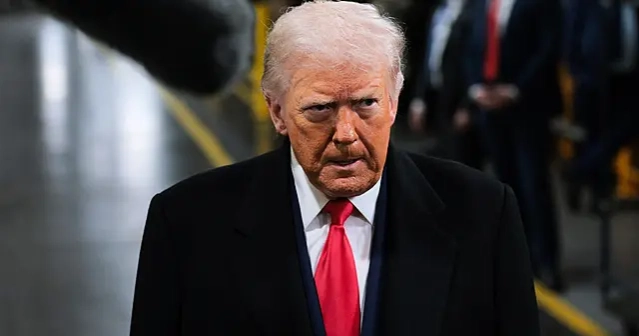
US President Donald Trump’s upcoming visit to China from May 13 to 15 is being viewed as a strategically significant move aimed at improving relations between the world’s two largest economies amid rising geopolitical and technological tensions.
According to Zhu Chenge, a researcher at the Institute of American Studies under the Chinese Academy of Social Sciences, direct engagement between national leaders remains the most effective way to stabilise China-US relations during periods of uncertainty and competition.
In an article published by a Chinese state-owned media outlet, Zhu said head-of-state diplomacy has historically played a vital role in managing differences between Beijing and Washington and preventing strategic miscalculations.
He noted that relations between the two countries over the past nine years have experienced trade disputes, technological rivalry and geopolitical tensions, making the upcoming summit particularly important.
The article recalled that previous meetings between Chinese President Xi Jinping and Trump helped reopen communication channels, expand cooperation and reduce areas of confrontation.
Zhu argued that routine diplomatic exchanges alone are insufficient to manage the complexity of China-US relations, stressing that direct leader-to-leader communication is necessary to clarify strategic intentions, define core interests and maintain stability.
The commentary also highlighted growing global uncertainty, including instability in the Middle East, risks to global energy supplies and trade routes, and intensifying strategic competition in the Asia-Pacific region.
It further pointed to expanding technological competition between China and the US, particularly in sectors such as artificial intelligence and quantum computing.
According to the article, Trump’s visit is expected to focus on strategic dialogue, including discussions on differences, red lines and future cooperation between the two powers.
Zhu said both countries have already made progress in areas such as tariffs and trade negotiations and gained a clearer understanding of each other’s strategic goals, creating favourable conditions for the upcoming meeting.
However, he cautioned that deeper challenges remain, including the need for clearer communication regarding cooperation, better understanding of China’s core interests by the US, and joint management of risks arising from major-power competition in the age of AI.
The article said any new strategic understandings reached during the visit could provide long-term guidance for China-US relations and contribute to greater global stability.
Zhu added that while differences between the two countries will continue, mature major-power relations depend on coexistence despite disagreements, maintaining strategic guardrails and expanding cooperation where possible.
He also stressed the importance of policy continuity in the US, arguing that China’s development should be viewed as an opportunity rather than a threat and that cooperation between the two nations serves the interests of both peoples.