South African President Cyril Ramaphosa on Wednesday described U.S. President Donald Trump’s decision to boycott next weekend’s Group of 20 (G20) summit in South Africa as “their loss,” while urging Washington to reconsider the effectiveness of boycott politics.
Speaking to reporters outside the South African Parliament, Ramaphosa said, “The United States needs to think again whether boycott politics actually works, because in my experience it doesn’t. It is unfortunate that the United States decided not to attend the G20. Their absence will not affect the summit. The G20 will go on, and all other heads of state will be present. In the end, fundamental decisions will be taken, and their absence is their loss.”
The U.S. decision comes after Trump cited widely disputed claims that members of South Africa’s white minority, the Afrikaners, are being violently persecuted and having their land seized because of their race. The president announced last week on social media that no U.S. government official would attend the Nov. 22-23 summit in Johannesburg.
Ramaphosa added that the boycott means the U.S. is “giving up the very important role that they should be playing as the biggest economy in the world.”
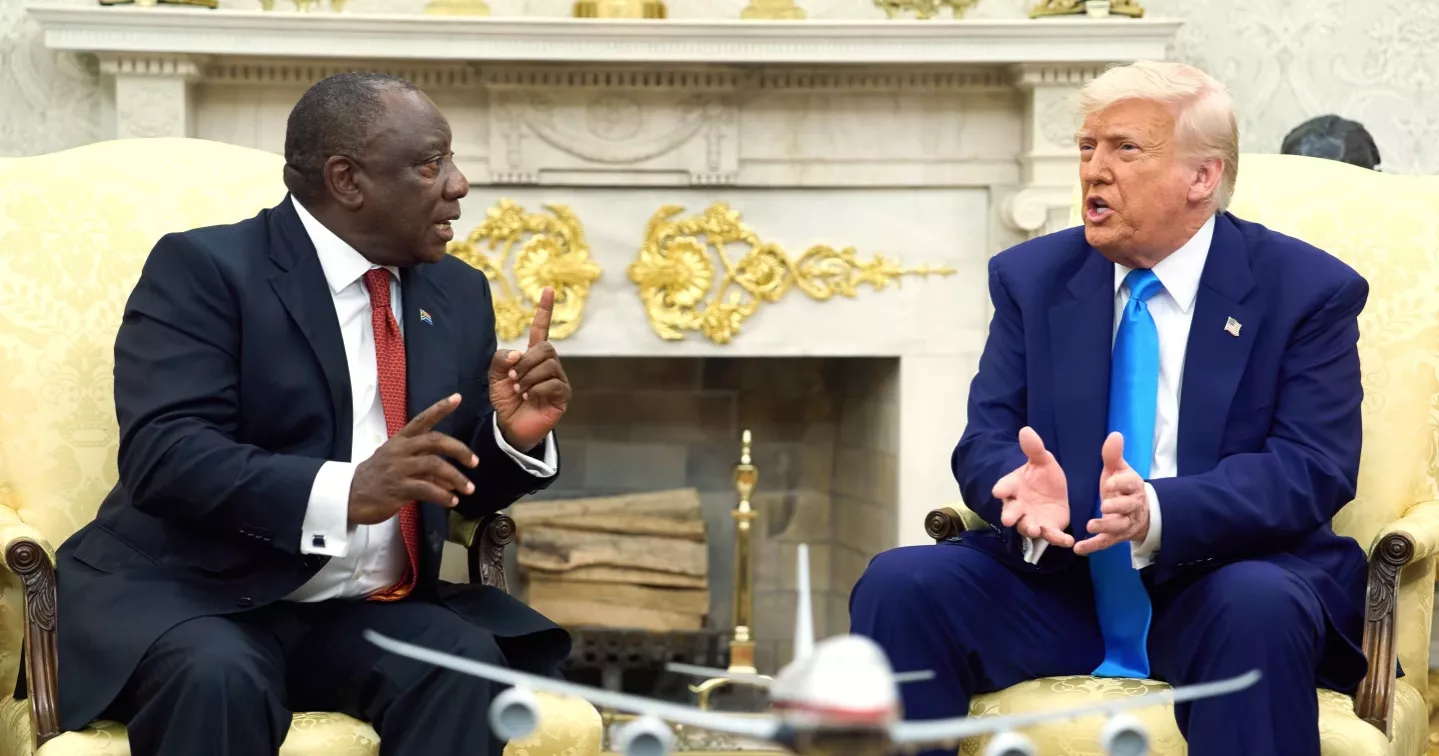
Trump had raised similar claims during a May meeting with Ramaphosa at the White House, despite evidence refuting widespread anti-white violence in South Africa. He also criticized the South African government over its decision to accuse Israel of genocide against Palestinians in Gaza at the United Nations’ top court.
The G20, formed in 1999, brings together 19 of the world’s largest economies and the European Union to address global economic and development issues. The United States is scheduled to take over the G20 presidency from South Africa at the end of the year.
Trump described the summit on Truth Social as “a total disgrace” and alleged that Afrikaners “are being killed and slaughtered, and their land and farms are being illegally confiscated.” While he had already confirmed he would not attend, U.S. Vice President JD Vance had been expected to represent the country.
Trump’s claims echo narratives pushed by conservative U.S. media since 2018 and are linked to criticisms of South Africa’s affirmative action policies, designed to redress historical inequalities faced by the Black majority under apartheid. Elon Musk and others have also accused the South African government of being anti-white.
Ramaphosa’s administration has dismissed these allegations as misinformation and misunderstanding of the country’s policies.
U.S.-South Africa relations, once robust, are at their lowest since the end of apartheid in 1994, and tensions escalated in March when Washington expelled the South African ambassador over remarks regarding Trump. The Trump administration has consistently criticized South Africa’s G20 hosting, with U.S. Secretary of State Marco Rubio skipping a February G20 foreign ministers’ meeting in Pretoria, calling South Africa’s policies “anti-American” and questioning its focus on climate change and global inequality.
With inputs from AP