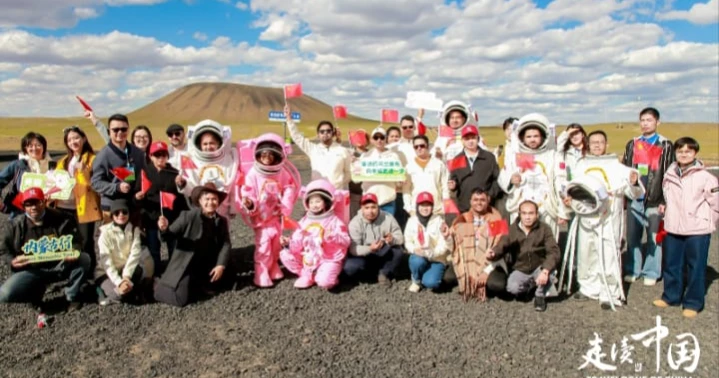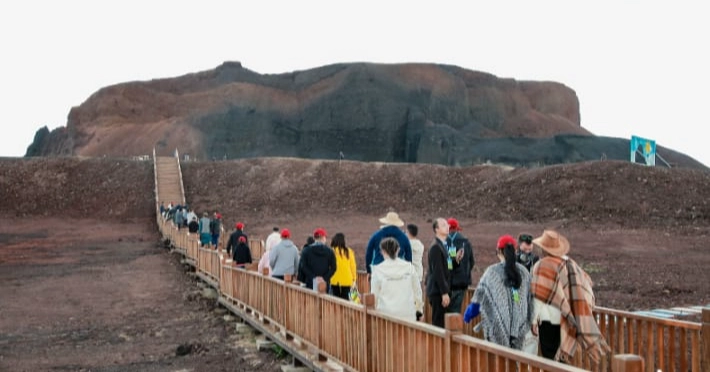
The Ulanhad volcano cluster in north China's Inner Mongolia Autonomous Region is driving rural revitalization by integrating cultural heritage and tourism, steadily advancing high-quality socioeconomic growth in the region.
The volcanic cluster is located between Ulanhad Sumu of Chayouhou Banner and Bayan Qagan Town, covering an area of approximately 280 square kilometers.
Home to more than 20 volcanoes, the Ulanhad volcano cluster boasts distinctive geological features, including grassland volcano formations and lava landforms.
It is the only Holocene-era volcanic cluster with documented eruptions along the southern edge of the Inner Mongolian Plateau and has been featured in Chinese National Geographic magazine.
The Ulanhad Volcanic Cluster stands out with its pristine and majestic cones-their structures remain remarkably intact with minimal weathering and erosion. Recognized as a rare continental fissure-type volcanic field both domestically and internationally, it has earned the reputation as a natural "Volcano Museum".
Speaking to UNB, Cen Haixin, Director of the Chahar Right Wing Rear Banner Department of Culture and Tourism, reported a revenue of 3.7 million Yuan last year.