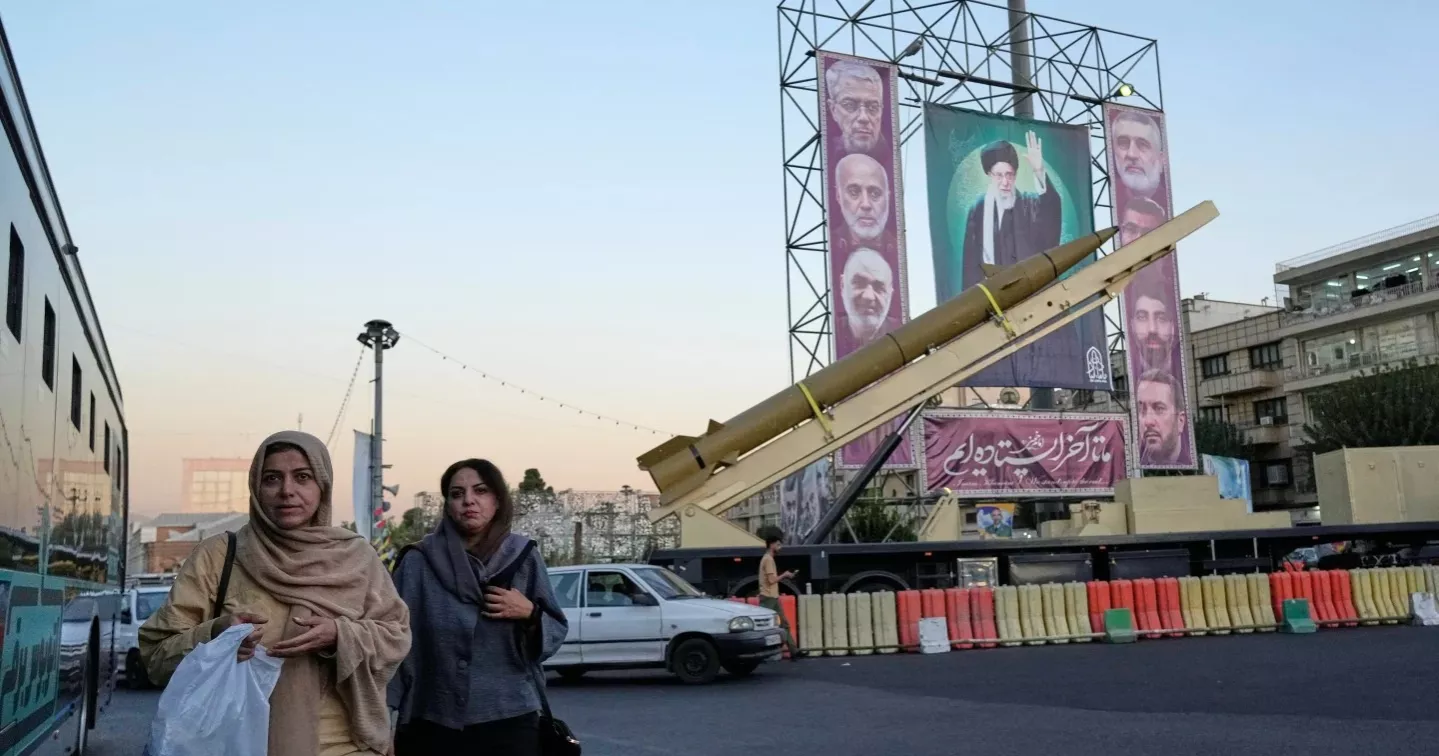
The United Nations has reimposed sanctions on Iran over its nuclear program, further straining the Islamic Republic as its people grapple with soaring food prices, widespread poverty and growing fears about the future.
The sanctions, enforced through a mechanism known as “snapback” in Iran’s 2015 nuclear deal with world powers, will freeze Iranian assets abroad, halt arms transactions with Tehran and penalize its ballistic missile development, among other measures.
Iran’s economy, already battered by inflation and the fallout of June’s 12-day war with Israel, faces even greater hardship. The national currency, the rial, has sunk to a record low, pushing the cost of meat, rice and other essentials beyond the reach of many families.
For ordinary Iranians, the struggle is unprecedented. “For as long as I can remember, we’ve been struggling with economic hardship, and every year it’s worse than the last,” said Sina, a father of a 12-year-old boy, who spoke on condition of anonymity for fear of repercussions. “For my generation, it’s always either too late or too early — our dreams are slipping away.”
Snapback and nuclear deadlock
Snapback sanctions cannot be vetoed by Russia or China at the UN Security Council, making them harder for Tehran to resist. The measure was triggered 30 days ago by France, Germany and the UK, citing Iran’s restrictions on international monitoring of its nuclear program and its stockpile of highly enriched uranium.
Iran further barred the International Atomic Energy Agency (IAEA) from accessing its nuclear sites after the June war, when Israeli and US strikes targeted facilities in the country. Tehran continues to hold uranium enriched to 60% purity — close to weapons-grade — sufficient for several atomic bombs if weaponization is pursued.
Iran has long claimed its nuclear program is peaceful, though the IAEA and Western powers maintain that Tehran ran an organized weapons program until 2003.
The three European nations said they tried to avoid invoking snapback, but Iran has failed to allow IAEA inspectors back or to account for its enriched uranium stockpile. Tehran argues that Europe cannot use the mechanism, pointing to the US withdrawal from the 2015 accord under then-President Donald Trump.
US Secretary of State Marco Rubio praised the European nations for “an act of decisive global leadership” and said diplomacy remains possible if Tehran agrees to direct talks.
However, analysts warn of heightened risks. “Given the knowledge Iran has, given the materials that remain in Iran, that’s a very dangerous assumption,” said Kelsey Davenport of the Arms Control Association. The absence of inspections, she added, could provide grounds for further strikes by the US or Israel.
Hunger, inflation and mental health strain
The economic toll of the June war has been devastating. Government data showed annual inflation at 34.5% in June, while food prices jumped over 50%. Shoppers report even steeper increases: pinto beans tripled in price in a year, rice rose by as much as 100% for premium varieties, and staples like chicken, butter, cheese and milk saw sharp hikes.
“I cannot omit them like fruits and meat from my grocery list because my kids are too young to be deprived,” said Tehran resident Sima Taghavi, a mother of two.
The soaring cost of living, combined with fears of renewed conflict, has driven more Iranians to seek psychological help. “The psychological pressure from the 12-day war on the one hand, and runaway inflation and price hikes on the other, has left society exhausted and unmotivated,” said Dr. Sima Ferdowsi, a clinical psychologist at Shahid Beheshti University, in remarks to local media.
Surge in executions
Amid growing unrest, authorities have intensified repression. Rights groups say Iran is executing prisoners at a pace unseen since 1988, when thousands were put to death at the end of the Iran-Iraq war.
The Oslo-based Iran Human Rights and the Washington-based Abdorrahman Boroumand Center reported over 1,000 executions so far in 2025, though the actual figure may be higher as not all cases are officially disclosed.
Protests in recent years, fueled by economic hardship, demands for women’s rights and calls for political change, have met with harsh crackdowns. Activists fear the latest sanctions and economic strain could accelerate repression further.