
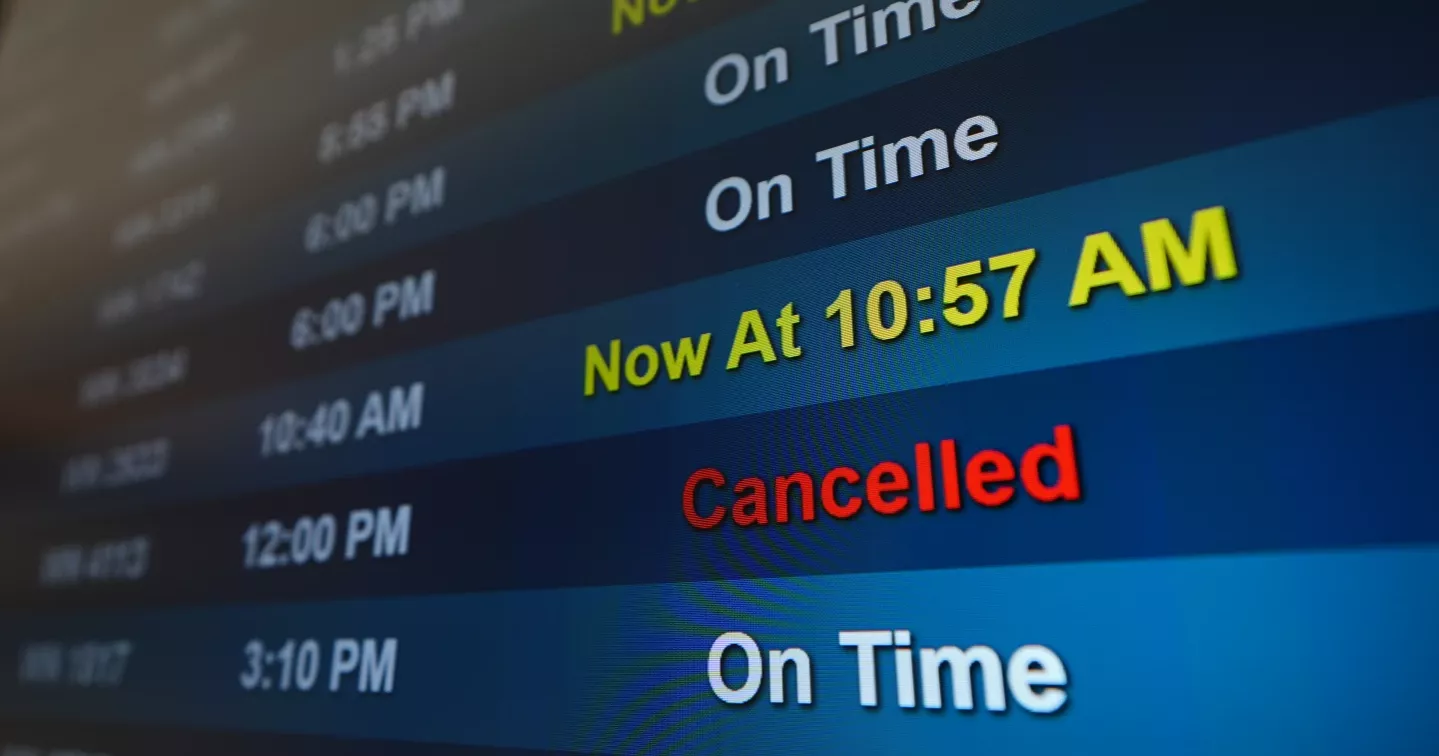
More than 2,500 flights were canceled across the United States over the weekend as the Federal Aviation Administration (FAA) continued to limit air traffic due to the ongoing government shutdown, officials said Saturday.
The slowdown affected some of the nation’s busiest airports but did not immediately cause widespread travel chaos. However, experts warn the disruption could escalate, particularly with the Thanksgiving travel period approaching. Concerns are mounting over its impact on tourism and holiday shipping.
Flight cancellations surged Saturday, traditionally a slower travel day, with over 1,500 flights called off, following more than 1,000 cancellations on Friday, according to FlightAware. By Saturday evening, U.S. airlines had already canceled another 1,000-plus flights scheduled for Sunday. Major disruptions were reported at airports in Atlanta, Chicago, Charlotte, and Newark, with ongoing staffing shortages at radar centers and control towers contributing to delays.
The FAA’s reductions, initially affecting 4% of flights at 40 key airports, are set to increase to 10% by Friday. Transportation Secretary Sean Duffy cautioned that further cuts could be necessary if the shutdown persists and more air traffic controllers remain off duty.
Controllers, many working without pay for nearly a month, have faced mandatory overtime and some are taking second jobs to make ends meet, according to the National Air Traffic Controllers Association. On Saturday, the union delivered 1,600 handwritten letters from members to Congress urging an end to the shutdown.
Passengers have faced uncertainty, though most were able to rebook canceled flights quickly. International flights have largely remained unaffected so far. Some travelers have canceled trips entirely or incurred extra costs for hotels and accommodations due to last-minute disruptions.
Experts warn that the consequences could extend beyond passenger travel. Nearly half of U.S. air freight is transported in passenger planes, meaning flight disruptions could raise shipping costs and consumer prices. Tourism, manufacturing, and local economies may also be affected.
“This shutdown is going to impact everything from cargo aircraft to business travel to tourism,” said Greg Raiff, CEO of Elevate Aviation Group. “Hotel taxes, city revenues, and broader economic activity will all feel the cascading effects.”
Source: AP