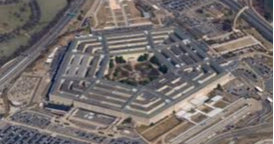
The Pentagon on Friday said it has struck agreements with seven technology companies to bring artificial intelligence into its classified computer systems, aiming to boost military capabilities in modern warfare.
The companies — Google, Microsoft, Amazon Web Services, Nvidia, OpenAI, Reflection and SpaceX — will provide AI tools to help improve decision-making in complex combat situations, the Defense Department said.
However, AI firm Anthropic is not part of the deals, following a public dispute with the Trump administration over ethical concerns and the use of AI in warfare.
The Pentagon has been moving quickly to expand its use of AI. A March report by the Brennan Center for Justice said the technology could help the military identify targets faster and manage logistics such as weapons maintenance and supply chains more efficiently.
At the same time, the growing use of AI has raised concerns about privacy and the risk of machines being allowed to select targets. One of the companies involved said its agreement includes provisions to ensure human oversight in certain operations.
Debate over military AI intensified during Israel’s war in Gaza and Lebanon, where US tech firms reportedly supported targeting systems. The high number of civilian deaths has fueled fears that such tools may contribute to unintended casualties.
Experts say key questions about the use of AI in warfare remain unresolved. Helen Toner of Georgetown University noted that while AI can help analyse data and monitor surveillance feeds, issues around human control, risk management and proper training are still being worked out.
She said militaries must strike a balance between quickly deploying AI for strategic advantage and ensuring operators are properly trained and do not rely too heavily on the technology.
Anthropic had sought guarantees that its AI would not be used in fully autonomous weapons or for surveillance of Americans. But Defense Secretary Pete Hegseth said companies must allow uses that the Pentagon considers lawful.
The company later filed a lawsuit after President Donald Trump attempted to block federal agencies from using its chatbot Claude, and after officials moved to label it a potential supply chain risk.
Earlier in March, OpenAI announced a deal with the Pentagon to use ChatGPT in classified systems, effectively replacing Anthropic. The company said Friday the agreement remains unchanged.
“We believe those defending the United States should have access to the best tools available,” OpenAI said.
According to a source familiar with the deals, at least one contract includes requirements for human supervision in missions involving autonomous or semi-autonomous AI systems, along with safeguards to protect constitutional rights and civil liberties.
Pentagon Chief Technology Officer Emil Michael said relying on a single provider would be risky, adding that the department chose to work with multiple companies after differences with one partner.
Some firms, including Amazon and Microsoft, already have experience working with the military on classified projects, while others like Nvidia and startup Reflection are newer to such roles. The Pentagon has also shown interest in open-source AI models as part of efforts to compete with China’s fast-growing AI sector.
The Defense Department said its AI platform, GenAI.mil, is already being used by military personnel, contractors and civilian staff to speed up tasks that once took months.
Officials said AI is helping improve maintenance planning, logistics and battlefield analysis, including distinguishing between civilian and military vehicles in surveillance footage.
Still, experts warn against over-reliance on the technology. Toner pointed to “automation bias,” where users may place too much trust in machine outputs.