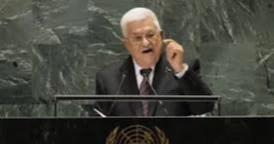
U.S. Secretary of State Marco Rubio has revoked the visas of Palestinian President Mahmoud Abbas and 80 other Palestinian officials ahead of the upcoming United Nations General Assembly in September, a decision the Palestinian Authority (PA) has condemned as a breach of international law.
A U.S. State Department official, speaking anonymously due to the sensitive nature of visa matters, confirmed Friday that the new restrictions target Abbas and other members of the Palestinian Authority. However, Palestinian diplomats stationed at the U.N. were granted exceptions and can continue their duties in New York.
This action is part of an ongoing series of measures taken by the Trump administration targeting Palestinian officials. It comes at a time of renewed conflict in Gaza, where Israel has declared the largest city a combat zone. Additionally, the U.S. has suspended a program that previously allowed wounded Palestinian children from Gaza to receive medical care in the U.S., following pressure from conservative voices online.
In a statement, the State Department said it is denying some visa applications from Palestinian officials, including those affiliated with the Palestine Liberation Organization (PLO).
"It is in our national security interest to hold the PLO and PA accountable for not fulfilling their commitments and for obstructing peace efforts," the department said.
It also emphasized that both the PLO and PA must reject terrorism and stop promoting it in education in order to be considered credible partners for peace, as required under U.S. law.
The Palestinian Authority criticized the move as a violation of the U.S.’s responsibilities as the host country of the United Nations, citing the U.N. Headquarters Agreement and the PA’s status as a U.N. observer state.
"The Palestinian presidency expressed deep regret and astonishment," the statement said, calling the decision a violation of international norms.
U.N. spokesperson Stephane Dujarric said the organization would seek clarification from Washington, noting,
"It’s important that all member and observer states are able to be represented."
Despite the visa revocations, the U.S. confirmed it would grant waivers to allow Palestinian representatives at the U.N. mission to continue operating in New York under existing host country agreements.
The move reflects the administration’s broader policy of tightening entry restrictions and making public examples of controversial visa decisions. In one recent case, a top State Department official publicly posted about revoking visas for British music duo Bob Vylan, who led a chant critical of the Israeli military.
Palestinian U.N. envoy Riyad Mansour said President Abbas had been scheduled to attend and speak at the General Assembly, as he has done for years. He was also expected to participate in a high-level meeting on September 22, co-hosted by France and Saudi Arabia, focused on advancing a two-state solution for Israel and Palestine.